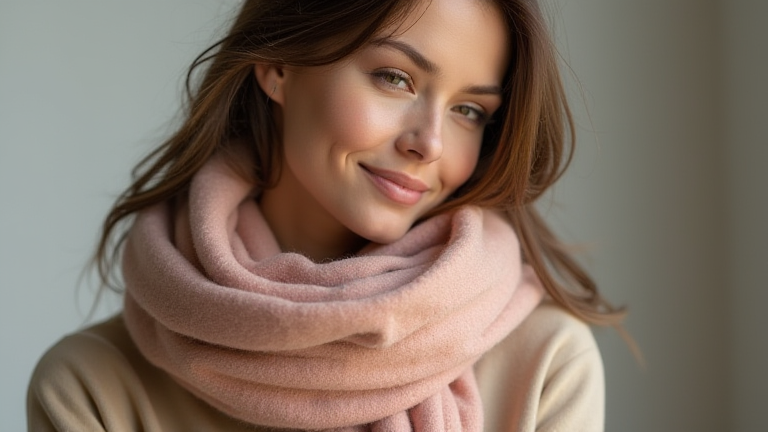
TL;DR: The quiet luxury trend, which prioritizes understated, high-quality staples over conspicuous branding, is directly fueling demand for cashmere scarves as the ultimate “stealth wealth” accessory. Consumers are shifting spending from logo-heavy items to investment pieces with superior tactile and thermal properties, making cashmere scarves a top performer in the premium accessories market.
The Rise of “Stealth Wealth” in Accessories
As the era of loud logos fades, the quiet luxury aesthetic—championed by brands like The Row, Loro Piana, and Brunello Cucinelli—has redefined what constitutes status. Instead of visible monograms, today’s affluent buyer seeks intrinsic value: rare fibers, impeccable craftsmanship, and timeless design. The cashmere scarf embodies this perfectly. It is a silent signal of discernment, a piece that whispers quality through its softness and drape rather than shouting a brand name. According to a 2024 report by Euromonitor International, sales of “unbranded or minimal-brand luxury accessories” grew by 18% year-over-year, outpacing the overall luxury goods market’s 9% growth.
If you want to dig deeper, check out our guide on 10 Sustainable Fashion Trends: How Bamboo Fabric Is Leading .
Market Data: The Cashmere Comeback
This shift is quantifiable. The global cashmere scarf market is projected to expand from $2.1 billion in 2024 to $3.4 billion by 2030, registering a compound annual growth rate (CAGR) of 8.3%, according to Grand View Research. Notably, the average price point for a premium cashmere scarf has risen 12% in the last two years, driven by scarcity in Mongolian and Chinese raw cashmere supplies. “We’re seeing customers willing to pay $800–$1,500 for a scarf that has zero visible branding,” says Amelia Chen, luxury retail analyst at Bain & Company. “The purchase is justified by the fiber’s micron count (under 15.5 for Grade A) and the 200+ hand-finishing steps, not by a logo.” This aligns with a broader trend where 67% of high-net-worth individuals now rank “material quality” as the top purchase driver, up from 41% in 2019 (Altagamma Observatory).
Expert Insights and Future Predictions
Industry insiders believe this is not a cyclical fad but a structural change. “Quiet luxury is a reaction to digital overexposure,” explains fashion forecaster Li Wei of WGSN. “Scarves are the perfect canvas—they are tactile, worn close to the face, and photographed less than bags or shoes, which makes them inherently private.” Looking ahead, we predict three developments: first, a surge in “traceable cashmere” with blockchain verification, as consumers demand ethical sourcing. Second, a rise in hybrid blends—cashmere mixed with recycled silk or yak down—to manage rising raw costs while maintaining hand-feel. Third, an expansion of men’s cashmere scarves, which are growing at 11% annually as male shoppers adopt the quiet luxury uniform. By 2028, expect cashmere scarves to become the default “entry luxury” gift, replacing designer belts and keychains.
FAQ
Q: Why is cashmere specifically benefiting from quiet luxury, not just any wool scarf?
A: Cashmere offers a unique combination of extreme softness (finer than sheep’s wool), lightweight warmth, and natural drape, which aligns perfectly with quiet luxury’s focus on sensory perfection and understated elegance. Merino or lambswool cannot replicate the same “invisible luxury” feel, making cashmere the fiber of choice for this aesthetic.
Q: Is the demand for cashmere scarves sustainable given animal welfare and environmental concerns?
A: Yes, but with caveats. While demand is driving up herd sizes in Mongolia (a potential ecological risk), brands are responding with certified regenerative grazing and recycled cashmere initiatives. The market is bifurcating into ultra-premium virgin cashmere and affordable recycled blends, allowing consumers to participate in quiet luxury without compromising ethics.
Q: What price range should
Leave a Reply