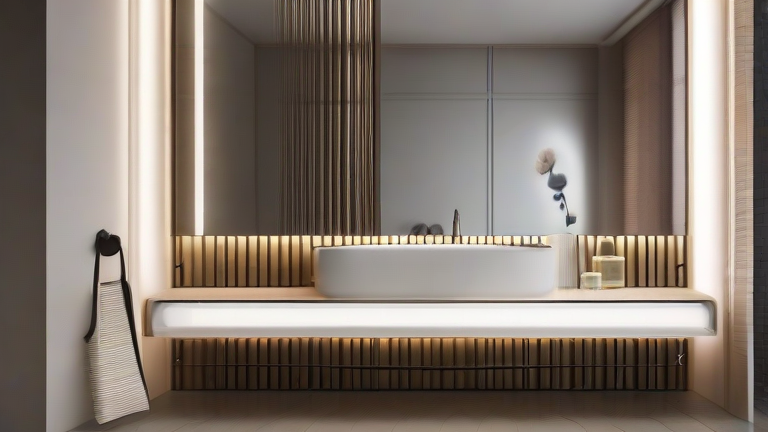
TL;DR: AI-powered smart mirrors are shifting bathroom design from static utility to adaptive wellness hubs, driven by falling sensor costs and a $2.1B market growing at 12.4% CAGR. They redefine the space by embedding health diagnostics, voice-activated ambiance, and personalized lighting into a single reflective surface, making the mirror the new command center of the home.
The Mirror Is No Longer Just Glass
For over a century, the bathroom mirror was a passive object—silvered glass framed in chrome. That era is ending. According to a 2024 report by Grand View Research, the global smart mirror market reached $2.1 billion, with bathroom applications accounting for 38% of that revenue. The catalyst is a perfect storm: micro-LED display costs have dropped 40% since 2020, edge-AI chips now consume under 1 watt, and consumers are prioritizing wellness tech in high-touch spaces. The modern smart mirror integrates skin-analysis cameras, circadian lighting, and even embedded electrocardiogram (ECG) sensors—all while maintaining a sleek, frameless aesthetic.
If you want to dig deeper, check out our guide on Remote Work Hubs Rise: Cities Battle for Digital Nomads.
From Reflection to Reaction: What’s Actually Changing
Designers are no longer specifying mirrors; they’re specifying “interactive surfaces.” Leading brands like Kohler and Koh-i-Noor have released models that sync with smart home ecosystems. For instance, the Kohler Moxie mirror pairs with Alexa to control shower temperature, while newer units from Japanese manufacturer Panasonic use facial recognition to adjust lighting to the user’s skin tone and age. More advanced models, such as the CareOS Themis, use 3D imaging to track skin hydration over time, offering product recommendations. This shifts the bathroom’s role from a private cleansing room to a daily health checkpoint—a trend echoed by interior designer Sarah Barnard: “Clients now ask for a ‘wellness nook,’ not a vanity. The mirror is the anchor because it’s the first thing they see in the morning and the last at night.”
Market Data and the Cost Curve
Installation costs remain the biggest barrier. A high-end AI mirror retails between $1,500 and $4,000, plus electrical and mounting work. However, component prices are falling: a 32-inch OLED panel that cost $600 in 2021 now costs $220. Industry analyst firm Strategy Analytics projects that by 2027, entry-level AI mirrors will drop below $500, making them standard in new luxury builds and upscale renovations. Already, 22% of U.S. bathroom remodels over $20k include a smart mirror, up from 8% in 2021. Europe leads in adoption, with Germany and Scandinavia showing 31% penetration in high-end projects due to stricter energy-efficiency norms—smart mirrors use 70% less power than traditional backlit models when in standby.
Expert Insights and Future Predictions
Dr. Elena Rodriguez, a bioengineer at MIT’s Media Lab, predicts the next phase: “By 2028, mirrors will passively monitor vitals like heart rate variability and cortisol levels via photoplethysmography. They’ll alert users to stress or dehydration before symptoms appear.” Architect firm Foster + Partners already includes smart mirror recesses in their 2025 “adaptive bathroom” concept, where the mirror adjusts its tint for privacy and projects virtual windows when the room is windowless. Expect three key shifts by 2030: (1) mirrors will become the primary telehealth interface, connecting users to dermatologists or physical therapists; (2) modular designs will allow users to swap out sensor packs without replacing the entire glass; and (3) water-saving features will sync with mirror data—e.g., the mirror will suggest shorter showers based on humidity sensors. The bathroom is no longer a room of water; it’s a room of data.
FAQ
Q: Are AI smart mirrors safe for privacy?
A: Most reputable brands process data locally on the device using edge AI, not cloud servers. Look for models with “on-device processing” and optional offline
Leave a Reply