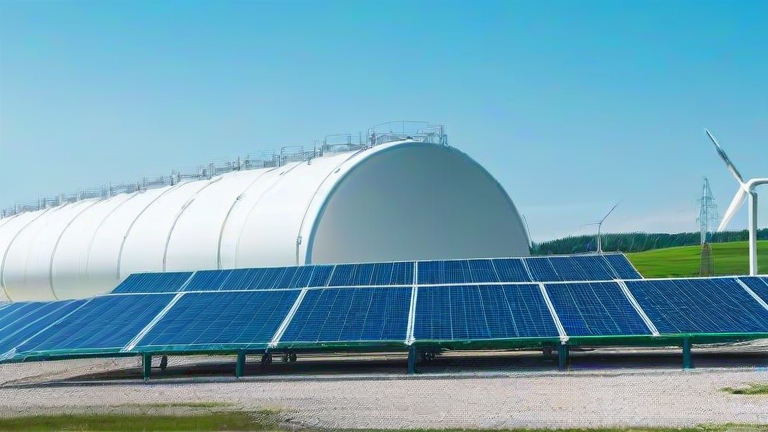
TL;DR: Green hydrogen is the only scalable route to decarbonize hard-to-abate industrial sectors such as steel, chemicals, and refining, where electrification alone cannot deliver the required heat or chemistry. Scaling it requires falling electrolyzer costs, guaranteed offtake, and cluster-based infrastructure buildout that shares transport and storage across multiple plants.
Market Analysis
Global green hydrogen capacity remains small relative to need, but the pipeline is expanding quickly. Analysts expect installed electrolyzer capacity to grow by an order of magnitude by 2030, driven by European subsidy auctions, Middle East export projects, and Asian industrial policy. Costs are the central variable: renewable electricity accounts for 60–70% of levelized hydrogen cost, so projects co-located with cheap solar or wind enjoy a structural advantage. Electrolyzer prices are falling on manufacturing scale, but financing costs have risen, widening the gap between announced projects and final investment decisions. The result is a market bifurcating into bankable, offtake-backed projects and speculative announcements that may never reach construction.
If you want to dig deeper, check out our guide on Quantum Computing in Drug Discovery: Latest Breakthroughs.
Strategy Insights
Three moves separate likely winners. First, secure offtake before building — long-term contracts with steel mills, ammonia producers, or refiners de-risk capital and satisfy lenders. Second, design for clusters: shared pipelines, salt cavern storage, and port infrastructure cut per-unit costs far faster than isolated plants. Third, treat policy as a product feature — stacking production credits, carbon contracts for difference, and export incentives can halve effective project cost. Companies should also hedge technology risk by contracting modular electrolyzers, allowing incremental expansion as prices decline rather than betting on a single large installation.
Case Studies
In Sweden, a direct-reduced iron pilot replaced coke with green hydrogen and demonstrated that steelmaking can cut emissions by over 90% at commercial scale, though economics depend on cheap firmed power. In Saudi Arabia, a flagship 2.2 GW project pairs solar and wind with ammonia export infrastructure, targeting European and Asian buyers willing to pay a green premium. In Germany, refinery operators are blending green hydrogen into existing processes, using established offtake to anchor early demand and justify pipeline investment. Each case shares a common thread: a committed buyer, supportive policy, and infrastructure shared across users.
FAQ
Q: Why not just electrify industry directly?
A: Many industrial processes — steel reduction, ammonia synthesis, high-temperature kilns — require molecular energy or chemical feedstocks that electricity cannot replace economically.
Q: What is the biggest barrier to scaling?
A: The cost gap versus grey hydrogen, which persists until renewable power is cheap, electrolyzers scale, and carbon pricing or subsidies close the difference.
Q: Which sectors should prioritize green hydrogen first?
A: Refining, ammonia, and steel offer the clearest near-term economics because they already consume hydrogen or have viable substitution pathways and willing offtakers.
Leave a Reply