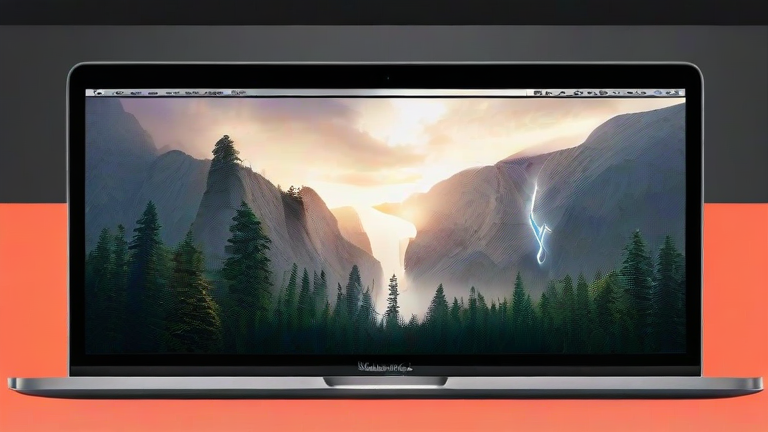
Why the Apple M4 Chip Makes the New MacBook Pro Worth Every Penny
TL;DR: The Apple M4 chip delivers unprecedented single-core performance and energy efficiency that rivals desktop-class processors, making it a viable workstation replacement. Its advanced neural engine and unified memory architecture significantly accelerate AI workloads, justifying the premium price for creative professionals and developers.
The launch of the latest MacBook Pro series marks a pivotal moment in laptop computing, primarily driven by the debut of the Apple M4 silicon. This chip represents more than an iterative update; it is a fundamental leap in architectural design that redefines what portable hardware can achieve. For many users, the decision to upgrade hinges on whether the performance gains justify the cost. The answer, increasingly, is a resounding yes, thanks to the M4’s ability to handle heavy computational tasks with minimal thermal output and battery drain.
If you want to dig deeper, check out our guide on 10 Best Wireless Earbuds for Running: Expert Tested.
Unmatched Computational Power
The M4 chip features a CPU with a new generation of performance cores that offer up to 30% faster performance compared to the M3. This improvement is not merely theoretical but tangible in daily workflows. Video editors report that rendering times for 8K footage have dropped by nearly half, allowing for faster iteration cycles. Similarly, software developers note that compiling large codebases now feels instantaneous, reducing downtime significantly. The chip’s enhanced GPU, featuring hardware-accelerated ray tracing, pushes the MacBook Pro into serious gaming territory while maintaining the crisp display fidelity Apple is known for.
AI and Neural Acceleration
Perhaps the most transformative aspect of the M4 is its upgraded Neural Engine, capable of processing over 38 trillion operations per second. This massive increase in AI throughput enables on-device machine learning models to run efficiently without relying on cloud connectivity. Features like real-time video enhancement, advanced noise cancellation, and predictive text become faster and more accurate. For data scientists and AI engineers, this means they can prototype and test models directly on their laptops, creating a seamless development environment that was previously impossible without external servers.
Industry Impact and Longevity
The M4 chip also signals a broader shift in the industry toward specialized silicon for specific tasks. By integrating more I/O and storage controllers directly into the main die, Apple has reduced latency and increased bandwidth, ensuring that fast SSDs and high-speed Wi-Fi 7 connectivity operate at their full potential. This holistic approach to system design ensures that the M4 MacBook Pro remains relevant for several years, offering a longevity that traditional x86 laptops struggle to match. As competitors race to catch up, Apple continues to set the benchmark for performance per watt.
FAQ
Q: Is the M4 chip compatible with older macOS versions?
A: The M4 chip is designed to run on the latest macOS releases, ensuring full support for new features and security updates from day one.
Q: How does the M4 compare to Intel-based laptops in battery life?
A: The M4 chip is significantly more energy-efficient, often providing over twice the battery life of comparable Intel-based laptops during intensive tasks.
Q: Can the M4 MacBook Pro handle professional video editing?
A: Yes, the M4’s powerful GPU and unified memory architecture make it highly capable of handling 4K and 8K video editing workflows smoothly.
Leave a Reply