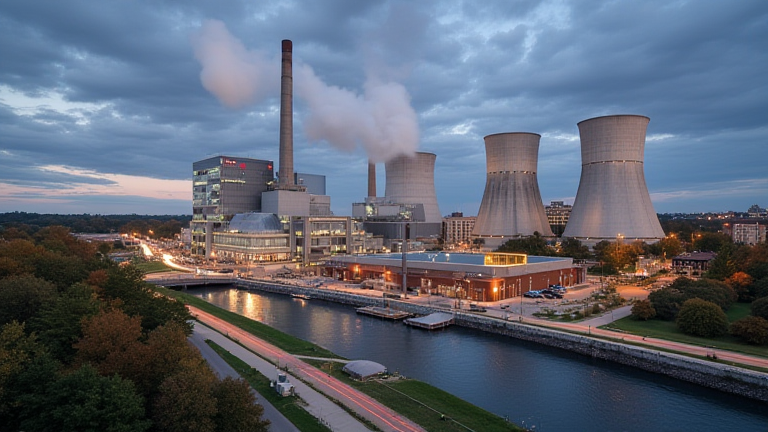
TL;DR: New England governors are leveraging Lowell’s industrial heritage and skilled workforce to position the region as a hub for advanced nuclear and fusion research. This strategic pivot aims to capture federal R&D funding and secure long-term energy independence for the northeastern grid.
The Strategic Imperative for New England Energy
The New England region faces a critical energy transition challenge. As legacy coal plants retire and renewable intermittency becomes a grid stability issue, policymakers are looking to advanced nuclear technologies (ANT) and fusion as baseload solutions. Governor’s Council discussions highlight Lowell, Massachusetts, not merely as a historical textile center, but as a potential nexus for high-tech energy innovation. The city’s existing infrastructure, including the Lowell National Historical Park’s industrial zones and proximity to major research institutions like MIT and UMass Amherst, provides a unique competitive advantage.
If you want to dig deeper, check out our guide on Residential Solar Powers Decentralized Energy Grids.
Market Analysis: The Northeastern Energy Landscape
The U.S. Advanced Nuclear market is projected to reach $150 billion by 2030, with New England representing approximately 12% of the regional demand due to high electricity prices and strict environmental regulations. Fusion, while further from commercial viability, offers the allure of limitless, clean energy. Investors are increasingly interested in “bridge technologies” such as small modular reactors (SMRs) that can be deployed faster than traditional large-scale plants. The local market analysis reveals a gap in specialized fabrication and engineering services, which Lowell’s revitalized manufacturing sector is uniquely positioned to fill.
Strategy Insights: Leveraging Industrial Heritage
Success in this sector requires more than just attracting companies; it requires building an ecosystem. The proposed strategy involves three key pillars. First, establishing a “Nuclear Fusion Innovation Center” in Lowell to facilitate collaboration between private firms and academic researchers. Second, implementing targeted tax incentives for companies that establish R&D facilities in the city. Third, partnering with local community colleges to retrain workers in precision machining, radiation safety, and systems engineering. This human capital strategy is crucial, as the shortage of skilled labor is the primary bottleneck for nuclear project timelines nationwide.
Case Studies: Lessons from Idaho and Georgia
Looking at successful precedents provides valuable insights. In Idaho, the establishment of the INL (Idaho National Laboratory) as a testing ground for advanced reactors created a ripple effect, spawning hundreds of support businesses within a fifty-mile radius. Similarly, Georgia’s focus on the Vogtle SMR project has led to significant infrastructure upgrades and workforce development programs. However, these cases also highlight the importance of community engagement. Early and transparent dialogue with local residents was essential in gaining public trust. Lowell must replicate this approach, emphasizing the economic benefits and safety protocols of new nuclear technologies to mitigate potential NIMBY (Not In My Backyard) opposition.
Path Forward and Economic Impact
By positioning itself as a leader in next-generation energy, Lowell can diversify its economic base and reduce reliance on traditional manufacturing. The potential economic impact is substantial, with estimates suggesting that every dollar invested in advanced nuclear R&D generates two to three dollars in local economic activity. Furthermore, the presence of fusion and nuclear facilities would likely attract ancillary industries, including cybersecurity firms specializing in critical infrastructure protection and advanced materials suppliers. This holistic approach ensures that the benefits of energy innovation are broadly shared across the New England region.
FAQ
Q: Why is Lowell specifically chosen for this initiative?
A: Lowell’s combination of industrial infrastructure, skilled workforce, and proximity to top-tier research universities makes it an ideal location for advanced energy R&D.
Q: What is the timeline for commercial fusion deployment?
A: Commercial fusion is not expected before 2040, but advanced nuclear technologies like SMRs can be deployed within the next five to ten years.
Q: How will this affect local electricity rates?
A: In the long term, baseload advanced nuclear power could stabilize and potentially reduce electricity rates by providing consistent, low-carbon energy supply.
Leave a Reply