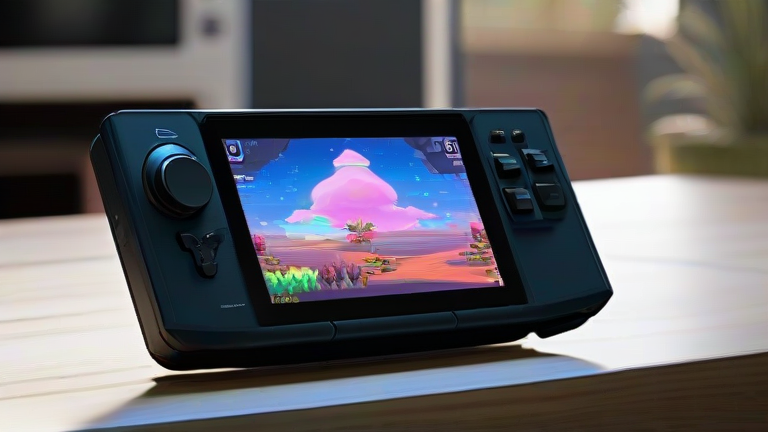
TL;DR: The Steam Deck OLED redefines portable PC gaming by fixing the original’s biggest weaknesses—battery life, screen quality, and weight—while adding a brighter, more efficient display. It is the ultimate handheld because it delivers a seamless, console-like experience without sacrificing the open-ended power of a full PC.
A Display That Changes Everything
The headline upgrade is the 7.4-inch OLED panel, replacing the original’s LCD. Beyond the obvious contrast and color accuracy, the new screen supports 90Hz refresh rate and a 1,000-nit peak brightness (HDR). This isn’t just a visual polish—it directly improves gameplay clarity in fast-paced titles, reduces motion blur, and makes outdoor play viable. Crucially, the OLED panel consumes far less power than the LCD, especially in dark scenes, which contributes to the battery gains.
If you want to dig deeper, check out our guide on 10 Simple Lifestyle Hacks to Boost Your Daily Energy.
Battery Life & Efficiency: The Real Killer Feature
Valve upgraded the internal battery from 40Wh to 50Wh, but the real win is the new 6nm AMD APU (custom “Sephiroth” chip). The process node shrink cuts idle and load power draw by roughly 20–30%. Combined with the OLED’s efficiency, users now get 3–8 hours of real gameplay—double the original’s average. For a handheld, this is the difference between a “toy” and a “travel companion.” The device also supports faster 45W USB-C PD charging, hitting 80% in under 45 minutes.
Hardware Refinements & Ergonomics
Valve shaved 30 grams off the total weight (now 640g) and reduced the device’s thickness slightly. The joysticks now use hall-effect sensors, eliminating drift permanently. The trackpads are larger and more responsive, and the haptics are tighter. The cooling system has been redesigned with a quieter fan and a larger heat spreader, which keeps the device cooler under sustained load. The result is a handheld that feels less like a prototype and more like a premium console.
Software & Ecosystem Maturity
The SteamOS 3.5 update introduces a new HDR pipeline, allowing the OLED to output true HDR in games that support it. The suspend/resume feature is now instant, and the UI has been optimized for the 90Hz refresh. Game compatibility has improved dramatically—over 14,000 titles are now verified or playable. The device also benefits from a thriving docked mode, with improved external display support up to 4K/120Hz via DisplayPort 1.4 over USB-C.
Industry Impact & Market Positioning
The Steam Deck OLED has forced competitors like the ASUS ROG Ally and Lenovo Legion Go to rethink their strategies. While those devices often offer higher raw performance (up to 30W TDP), they suffer from poor battery life and no sleep-resume reliability. Valve’s price-to-value ratio remains unmatched: starting at $549 for 512GB, it undercuts the competition while offering a superior integrated experience. The OLED model also signals a shift toward efficiency over brute force—a lesson the entire handheld industry is now absorbing. With the Steam Deck OLED, Valve hasn’t just iterated; it has set the new baseline for what a portable gaming PC should be.
FAQ
Q: Is the Steam Deck OLED worth upgrading if I already own the original LCD model?
A: Yes, if battery life and screen quality matter to you. You’ll see roughly double the playtime, a significantly better display, and a lighter, quieter device. If you only play docked, the upgrade is less critical, but for handheld use, the difference is night and day.
Q: Does the OLED model run all the same games as the original?
A: Absolutely. It uses the same architecture and runs the same SteamOS, so your entire library and save files carry over. The 6nm chip is slightly more efficient but not more powerful—so performance per frame is nearly identical, just with
Leave a Reply