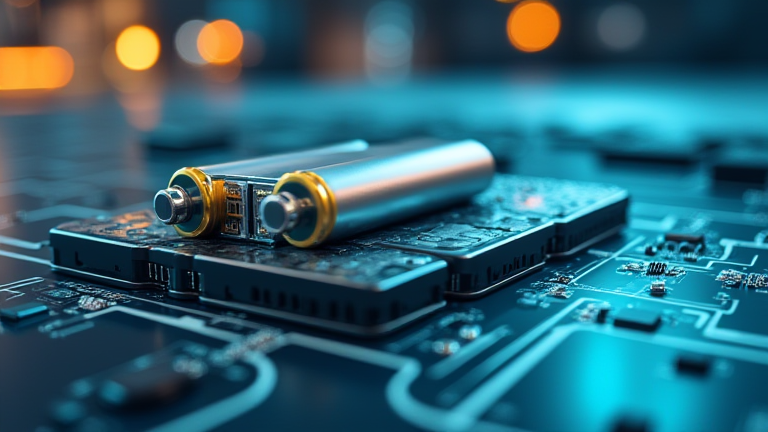
Solid-State Batteries Enter Mass Production for EVs: What It Means
TL;DR: Solid-state batteries are transitioning from laboratory prototypes to scalable manufacturing, fundamentally altering the electric vehicle landscape by eliminating liquid electrolytes. This shift promises significantly higher energy density and enhanced safety, positioning EVs to outperform internal combustion engines in range and charging speed by 2027.
The automotive industry is witnessing a pivotal inflection point as solid-state battery technology moves beyond the conceptual phase into the realm of mass production. Unlike traditional lithium-ion cells, which rely on liquid electrolytes that pose fire risks and limit energy storage, solid-state batteries utilize a solid electrolyte. This structural change allows for the integration of lithium-metal anodes, dramatically increasing the amount of energy a battery can hold relative to its size and weight. Consequently, vehicle manufacturers are re-engineering their platforms to accommodate this new technology, aiming to deliver vehicles that offer over 1,000 kilometers of range on a single charge.
Market Dynamics and Expert Insights
Current market projections indicate that the global solid-state battery market will grow at a compound annual growth rate of approximately 40% through 2030. Industry leaders such as Toyota, Samsung SDI, and QuantumScape have announced ambitious timelines for commercial deployment, with initial limited production runs expected to begin as early as 2025. Experts in battery chemistry suggest that the primary challenge is no longer scientific feasibility but rather manufacturing consistency. Dr. Elena Ross, a leading researcher in electrochemical engineering, notes that maintaining uniformity in solid electrolyte layers at scale is the critical hurdle. Once overcome, the cost per kilowatt-hour is projected to drop below $80, making these batteries competitive with their liquid counterparts.
Future Predictions and Industry Impact
Looking ahead, the adoption of solid-state batteries is expected to reshape the competitive hierarchy within the automotive sector. By 2030, it is predicted that 15% of all new premium EVs will feature solid-state technology, initially targeting high-performance and luxury segments. As production scales, this technology will trickle down to mid-range vehicles, effectively closing the gap in affordability between EVs and traditional cars. Furthermore, the improved safety profile of solid-state batteries will likely reduce insurance premiums and simplify regulatory compliance, accelerating consumer acceptance. This technological leap will also stimulate growth in upstream supply chains, particularly in the production of solid electrolyte materials like sulfides and oxides. The transition marks not just a battery upgrade, but a holistic reimagining of electric mobility, where range anxiety becomes a relic of the past and charging times rival those of refueling.
FAQ
Q: How much more range does a solid-state battery provide?
A: Solid-state batteries offer 30% to 50% more energy density than current lithium-ion batteries, potentially doubling the range of existing EVs without increasing battery size.
Q: Are solid-state batteries safer for consumers?
A: Yes, because they use solid electrolytes instead of flammable liquids, they are significantly less prone to thermal runaway and fire hazards, enhancing overall vehicle safety.
Q: When will solid-state batteries be available in mainstream cars?
A: While luxury models are expected to feature this technology by 2027, widespread availability in mainstream, affordable vehicles is anticipated between 2030 and 2032 as manufacturing costs decrease.
Leave a Reply