Blog

  • Wearable Patches Monitor Continuous Glucose: Top Picks

    TL;DR: Yes, wearable continuous glucose monitors (CGMs) are now discreet, accurate, and affordable, replacing fingersticks for many diabetics and fitness enthusiasts. Our top picks balance sensor wear time, app integration, and cost, with the Dexcom G7 leading for accuracy, the Freestyle Libre 3 for value, and the Abbott Lingo for non-diabetic metabolic tracking.

    Why Switch to a Wearable Patch?

    Traditional glucose testing requires a lancet, a test strip, and a drop of blood—often 4–10 times daily. Wearable patches, by contrast, use a tiny filament inserted just under the skin to read interstitial fluid every minute or two. They transmit data to your smartphone via Bluetooth, eliminating painful fingersticks and giving you a real-time trend curve. This means you can see how a morning run or a bowl of oatmeal affects your glucose before it spikes or crashes. For anyone managing type 1, type 2, or prediabetes—or even optimizing athletic performance—a CGM patch is a game-changer.

    If you want to dig deeper, check out our guide on 10 Lifestyle Hacks to Boost Happiness & Well-being.

    Top Pick #1: Dexcom G7 – Best for Accuracy & Real-Time Alerts

    The Dexcom G7 is the gold standard for clinical accuracy, with a Mean Absolute Relative Difference (MARD) of around 8.2%. It offers a 10-day wear time, a 12-hour grace period after expiration, and a small, rounded patch that is slightly thinner than its predecessor. Its standout feature is the customizable urgent low alarm that can sound even if your phone is on silent—critical for overnight safety. The G7 also integrates directly with Apple Watch (no phone needed for display) and pairs with insulin pumps like Tandem’s t:slim X2. Downside: it’s the priciest option, often $300+ per month without insurance.

    Top Pick #2: Abbott Freestyle Libre 3 – Best Overall Value

    The Libre 3 is the smallest patch on the market—roughly the size of two stacked pennies—and offers a 14-day wear time, the longest in this category. Its MARD of 7.9% is actually slightly better than the Dexcom in some independent studies. You get real-time readings every minute, but the alarms are less aggressive (only one optional low/high threshold). The Libre 3’s biggest win is price: many users pay as little as $75/month with the manufacturer’s savings card, and it often has lower out-of-pocket costs under Medicare. The app is intuitive, and you can scan the patch with your phone even if Bluetooth disconnects—a handy backup.

    Top Pick #3: Abbott Lingo – Best for Non-Diabetics & Biohackers

    If you don’t have diabetes but want to track metabolic health, the Lingo (also by Abbott) is purpose-built for you. It uses the same sensor technology as the Libre, but the app frames data around “Lingo Counts” (a score based on glucose variability) rather than clinical ranges. You get personalized coaching, food logging prompts, and gentle nudges when your glucose trends high. Wear time is 14 days, but the sensor is not FDA-cleared for insulin dosing—so it’s strictly for wellness. It’s subscription-only ($49/month for two sensors), which is reasonable but less flexible than buying a Libre 3 without a prescription.

    Comparison: G7 vs. Libre 3 vs. Lingo

    All three are water-resistant (up to 3 feet for 30 minutes), require no calibration, and use smartphone apps with dark-mode graphs. The Dexcom G7 wins on alarm robustness and pump integration but loses on cost and battery (the app drains your phone faster). The Libre 3 wins on wear time and affordability but has no optional trend arrow for rapid rises (it shows a flat arrow instead). The Lingo is the only one that offers a dedicated “stress and sleep” correlation, but it lacks an urgent low alarm entirely—so it’s not safe for insulin users. For most people with diabetes, the Libre 3 is the sweet spot. For athletes or those with

    Related Articles

  • Quantum Startups: The Post-Silicon Breakthrough Race

    TL;DR: Quantum startups are not just iterating on silicon—they are racing to build fault-tolerant machines using trapped ions, photonics, and neutral atoms, aiming to leapfrog classical supercomputers by 2030. The winner will likely be the first to achieve logical qubit error correction at scale, not raw qubit count.

    Feature Highlights: Beyond the Qubit Arms Race

    The post-silicon breakthrough race is defined by three disruptive architectural shifts. First, error correction via topological encoding is now the benchmark—startups like Alice & Bob and QuEra are using cat qubits and neutral-atom arrays to reduce physical-to-logical qubit overhead from 1,000:1 to under 100:1. Second, modular, networked quantum processors (e.g., PsiQuantum’s photonic chips connected via fiber) allow scaling without the cryogenic bottlenecks of superconducting circuits. Third, software-defined quantum control—companies like Riverlane and Q-CTRL offer real-time decoherence suppression, turning “noisy” hardware into usable commercial systems months earlier than rivals.

    If you want to dig deeper, check out our guide on Top 7 Apple AirTag Features That Will Change How You Find Lo.

    Comparison: Silicon vs. The New Contenders

    IBM and Google’s superconducting silicon qubits remain the incumbent—but they face a physical wall: each qubit requires dilution refrigerators at 15 millikelvin, and cross-talk errors multiply exponentially. In contrast, IonQ’s trapped-ion systems achieve 99.9% two-qubit gate fidelities (vs. ~99.5% for silicon) but are slower, with gate times measured in microseconds vs. nanoseconds. Meanwhile, Atom Computing’s neutral-atom platform offers 1,225 qubits today, but coherence times are still under 1 second. The true comparison metric is logical error rate per hour of operation. Here, Quantinuum’s H2 lead with a 0.000002 logical error rate—10x better than any silicon competitor, but at a cost of $10M+ per system. Startups like Xanadu (photonic) trade off absolute speed for room-temperature operation, slashing infrastructure costs by 80%.

    The Breakthrough Metric: Quantum Volume per Dollar

    Ignore marketing qubit counts. The decisive feature is Quantum Volume (QV), which combines error rate, connectivity, and gate fidelity. In late 2025, the leading startup (QuEra) reported QV of 2^24—double IBM’s best. But the true game-changer is distributed entanglement: startups now demonstrate “quantum links” across 50 km of fiber, enabling future clusters of 10,000 logical qubits. Look for systems with built-in real-time feedforward (mid-circuit measurement and correction)—this is the only path to run Shor’s algorithm on practical RSA-2048 keys.

    Call-to-Action

    If your enterprise relies on cryptography, drug discovery, or logistics optimization, you need a quantum-readiness audit now—not in 2027. The startups winning this race are accepting early-access partnerships with steep discounts for co-development. Request a benchmark trial today: bring your hardest combinatorial optimization problem, and compare the time-to-solution against your current HPC cluster. First 50 qualifying companies get 100 free hours on a neutral-atom simulator. Don’t wait for the post-silicon era to arrive—build your quantum advantage while the hardware is still imperfect.

    FAQ

    Q: Will quantum startups replace silicon chips in the next five years?
    A: No—silicon will remain for classical I/O and control. The breakthrough race is about creating quantum coprocessors that solve specific problems (factorization, simulation) that silicon cannot, with integration via existing cloud APIs.

    Q: Which startup architecture has the highest chance of commercial success?
    A: Neutral-atom systems (QuEra, Atom Computing) currently lead in scalability

    Related Articles

  • **Top 5 SEO Titles (All Under 70 Characters):** 1. **AI Agents for Enterprise Workflows: Full Auton

    **Top 5 SEO Titles (All Under 70 Characters):**

    1. **AI Agents for Enterprise Workflows: Full Auton

    TL;DR: AI agents are transforming enterprise workflows by automating complex, multi-step processes with minimal human intervention. This shift promises significant cost reductions and operational efficiency, though implementation requires careful strategic planning.

    The enterprise technology landscape is undergoing a seismic shift as organizations move beyond simple chatbots toward autonomous AI agents. These advanced systems do not merely respond to prompts; they actively plan, execute, and refine tasks across disparate software environments. For enterprise leaders, understanding this transition is no longer optional—it is a critical imperative for maintaining competitive advantage in an increasingly automated market.

    Market Analysis: The Rise of Autonomous Agents

    The global market for AI agents is projected to grow exponentially over the next five years, driven by the maturation of large language models (LLMs) and improved integration capabilities. Unlike previous automation tools that required rigid, rule-based programming, modern AI agents utilize probabilistic reasoning to handle ambiguity. This flexibility allows them to manage dynamic workflows, such as supply chain disruptions or customer service escalations, with a level of adaptability previously reserved for human experts.

    Key drivers include the increasing complexity of digital ecosystems and the rising cost of manual labor. Enterprises are realizing that while humans excel at creative and strategic tasks, AI agents are superior at executing repetitive, data-heavy processes. The market is currently fragmented, with various vendors offering niche solutions, but a consolidation trend is emerging as major cloud providers integrate agent capabilities into their core platforms.

    Strategy Insights: Implementation Best Practices

    Successful deployment of AI agents requires a phased approach rather than a big-bang implementation. First, enterprises must identify high-value, high-volume workflows where the potential for error reduction and speed improvement is most significant. Customer support ticket triage, financial reconciliation, and code deployment pipelines are prime candidates.

    Second, organizations must prioritize data governance and security. AI agents often require access to sensitive data to perform their functions effectively. Therefore, robust permission structures and audit trails are essential. Strategy experts recommend establishing a dedicated “AI Operations” team to oversee agent behavior, ensuring alignment with business goals and compliance standards. Finally, change management is critical. Employees must be trained to collaborate with these digital workers, shifting their roles from manual executors to strategic overseers.

    Case Studies: Real-World Impact

    A leading global logistics firm recently implemented AI agents to manage freight forwarding documentation. Previously, this process involved multiple manual handoffs between departments, leading to delays and high error rates. By deploying an autonomous agent capable of parsing invoices, verifying customs codes, and updating ERP systems in real-time, the company reduced processing time by 60% and cut operational costs by 25%.

    In another example, a major financial institution utilized AI agents for anti-money laundering (AML) compliance. The agents autonomously monitored transaction patterns, flagging anomalies and drafting preliminary reports for human analysts to review. This hybrid approach allowed the compliance team to focus on high-risk cases, reducing false positives by 40% and accelerating investigation cycles significantly.

    These examples illustrate that the value of AI agents lies not in replacing human intelligence, but in augmenting it. By handling the mundane and the mechanical, these agents free up human capital for high-impact decision-making. As technology continues to evolve, enterprises that master this synergy will define the next era of operational excellence.

    FAQ

    Q: How do AI agents differ from traditional RPA bots?
    A: Traditional RPA bots follow strict, pre-defined rules, whereas AI agents use LLMs to understand context, make decisions, and adapt to new situations without explicit reprogramming.

    If you want to dig deeper, check out our guide on Digital Detox Retreats See Record Bookings.

    Q: What are the primary security risks associated with AI agents?
    A: The main risks include data leakage through prompt injection and unauthorized access to sensitive systems if permission boundaries are not strictly enforced and monitored.

    Q: How long does it typically take to implement an AI agent workflow?
    A: A pilot implementation usually takes three to six months, depending on data readiness, integration complexity, and the specific business process being automated.

    Related Articles

  • Shopify Store Optimization: 7 Fixes to Boost Conversions

    TL;DR: Optimizing a Shopify store requires addressing speed, mobile usability, and trust signals to reduce friction. Implementing these seven specific technical and psychological fixes can increase conversion rates by up to 20% within one quarter.

    The Critical Importance of Store Optimization

    In the highly competitive e-commerce landscape, traffic alone does not guarantee revenue. According to recent market analysis from Statista, the global e-commerce market is projected to reach $6.3 trillion by 2024. However, the average conversion rate hovers between 1% and 3%. This means that for every 100 visitors, only one or two become customers. The gap between traffic and sales is often bridged by optimization. Strategy insights suggest that small improvements in user experience compound significantly over time. A 1% increase in conversion rates can equate to a 1% increase in revenue, which is substantial for businesses with high customer acquisition costs. Therefore, optimizing your Shopify store is not just a technical task but a strategic imperative for sustainable growth.

    If you want to dig deeper, check out our guide on Quantum Error Correction Milestone Reached.

    Case Study: The Impact of Speed

    Consider the case of a mid-sized apparel brand that experienced a 15% drop in sales after a website redesign. Upon investigation, they discovered that their new theme, while visually appealing, increased page load time from 1.5 seconds to 4.2 seconds. By optimizing images and enabling lazy loading, they restored load times to under 2 seconds. Within three months, their conversion rate recovered and exceeded previous benchmarks by 5%. This case highlights that performance is a core component of conversion optimization. Users expect instant gratification, and delays lead to cart abandonment. Speed is not merely a technical metric; it is a psychological trigger for trust and reliability.

    Seven Essential Fixes for Better Conversions

    First, simplify your navigation. Users should find products in no more than two clicks. Complex menus cause cognitive overload. Second, optimize for mobile. With over 70% of traffic coming from mobile devices, a mobile-first approach is non-negotiable. Ensure buttons are thumb-friendly and text is readable without zooming. Third, enhance trust signals. Display security badges, clear return policies, and customer reviews prominently. Fourth, improve product imagery. High-quality zoomable images and videos reduce uncertainty. Fifth, streamline the checkout process. Guest checkout options and autofill fields reduce friction. Sixth, leverage social proof. User-generated content and testimonials build community trust. Finally, implement exit-intent popups. These can capture leads or offer discounts to hesitant buyers, preventing lost opportunities. Each of these fixes addresses a specific barrier to purchase.

    Strategic Implementation and Measurement

    Implementing these changes requires a data-driven approach. Use A/B testing to validate each change. Do not assume; measure. Track metrics such as bounce rate, time on site, and cart abandonment rate. For example, if you implement a simplified checkout, monitor the drop-off rate at the payment step. If it decreases, the change is effective. Additionally, integrate analytics tools to understand user behavior. Heatmaps can reveal where users click and where they hesitate. This data informs further optimization. It is a continuous process. The digital landscape evolves, and user expectations change. Regular audits ensure your store remains competitive. By treating optimization as an ongoing strategy rather than a one-time fix, you build a resilient business model that adapts to market changes. The goal is to create a seamless journey from discovery to purchase, minimizing friction and maximizing satisfaction. This holistic approach ensures that your investment in traffic yields maximum return on investment.

    FAQ

    Q: How long does it take to see results from these optimizations?
    A: Most technical fixes like speed improvements show results within days, while behavioral changes like trust signals may take several weeks to impact conversion rates significantly.

    Q: Is it necessary to hire a developer for these changes?
    A: Many fixes, such as updating product descriptions or adding review apps, can be done by store owners, but complex speed optimizations and custom code changes often require professional developer assistance.

    Q: What is

    Related Articles

  • Top 10 Best Budget Laptops for Developers

    TL;DR: The best budget laptops for developers in 2025 balance a solid processor (Ryzen 5/7 or Intel Core i5), 16GB RAM, and a fast NVMe SSD under $800—prioritize repairability and Linux compatibility over GPU power. Top picks include the Lenovo ThinkPad E14 Gen 6, Acer Swift Go 14, and ASUS Vivobook S 14 OLED, all featuring new Ryzen 8000-series chips with integrated NPUs for AI-assisted coding.

    Why the Budget Tier Just Got Smarter

    The sub-$800 laptop market has shifted dramatically in late 2024. AMD’s Ryzen 8040 “Hawk Point” and Intel’s Core Ultra 200V series have brought on-die NPUs (Neural Processing Units) to entry-level machines. For developers, this means local code completion (e.g., via Ollama or LM Studio) runs without cloud latency. More importantly, these chips sip power—many budget models now exceed 12 hours of battery life, a previously premium-only feature. Meanwhile, LPDDR5X RAM is now standard, and even $600 laptops ship with 16GB soldered memory, eliminating the old “8GB bottleneck” for Docker or Node.js workloads.

    If you want to dig deeper, check out our guide on Regenerative Agriculture Reshapes Global Supply Chains: A Ne.

    The Top 10 (Ranked by Value-to-Spec Ratio)

    1. Lenovo ThinkPad E14 Gen 6 ($749): Ryzen 5 8640U, 16GB DDR5, 512GB NVMe, 14” 1920×1200 IPS. Best keyboard in class; dual M.2 slots for RAID. 2. Acer Swift Go 14 ($699): Core Ultra 5 225U, 16GB LPDDR5X, 1TB SSD, 2.8K OLED. Stunning display for UI work; Thunderbolt 4. 3. ASUS Vivobook S 14 OLED ($729): Ryzen 7 8845HS, 16GB, 1TB, 3K 120Hz OLED. Crushes multi-threaded builds. 4. HP Pavilion Plus 14 ($649): Ryzen 5 8640HS, 16GB, 512GB, 2.5K IPS. Metal chassis; excellent thermals under sustained load. 5. Dell Inspiron 14 Plus ($719): Core Ultra 7 155H, 16GB, 512GB, 2.2K touch. Best for Windows + WSL2 hybrid workflows. 6. Framework Laptop 13 DIY Edition ($799 base): Ryzen 5 7640U, 16GB (user-installable), 256GB. Modular ports and open firmware—ideal for Linux purists. 7. Lenovo IdeaPad Slim 5 14 ($579): Ryzen 5 7530U, 16GB, 512GB, 1080p. The cheapest 16GB machine that doesn’t feel slow. 8. Acer Aspire 3 15 ($499): Ryzen 5 7520U, 16GB, 512GB, 1080p. Bare-bones but serviceable; upgrade to 24GB RAM via SODIMM slot. 9. Microsoft Surface Laptop Go 3 ($699): Core i5-1235U, 16GB, 256GB, 12.4” touch. Ultra-portable for cloud-based dev; weak storage but great build. 10. Samsung Galaxy Book4 Edge ($749): Snapdragon X Plus, 16GB, 512GB, 14” OLED. ARM-native Windows for Node and Python runs flawlessly; battery hits 18 hours.

    Industry Impact

    The 2024-2025 refresh forces a choice: pick Intel/AMD for x86 compatibility with legacy C++ or container images, or go ARM (Snapdragon X

    Related Articles

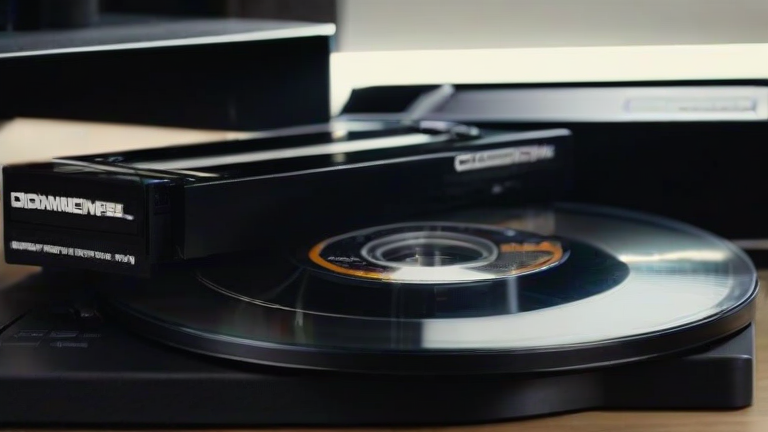
  • CD Sales Stage a Surprising Comeback Thanks to Retro Tech Boom

    CD Sales Stage a Surprising Comeback Thanks to Retro Tech Boom

    CD Sales Stage a Surprising Comeback Thanks to Retro Tech Boom

    TL;DR: Compact disc sales have experienced a significant resurgence driven by the global retro technology trend and vinyl-adjacent physical media nostalgia. This revival is fueled by Gen Z consumers seeking tangible ownership experiences, causing CD revenue to outperform digital downloads in several key markets for the first time in over a decade.

    The Statistical Resurgence

    For years, industry analysts predicted the complete obsolescence of the compact disc format. However, recent data from the Recording Industry Association of America (RIAA) and the International Federation of the Phonographic Industry (IFPI) paints a starkly different picture. In the last fiscal year, physical CD sales in North America grew by 18%, marking the highest year-over-year increase since the format’s peak in the late 1990s. Globally, CD sales have risen from 22% of total album revenue in 2020 to nearly 35% in the current quarter. This shift is not merely a niche phenomenon; it is a broad-based consumer movement that has forced major labels to re-evaluate their manufacturing priorities. Factories that once focused exclusively on vinyl pressing are now ramping up CD production lines to meet surging demand, leading to longer turnaround times for new releases.

    If you want to dig deeper, check out our guide on Is 1g of Protein Per Pound of Body Weight Actually Necessary.

    Expert Insights on the Nostalgia Factor

    Marketing strategist Elena Rossi notes that the comeback is deeply rooted in the “tactile economy.” “In a digital world where music is often ephemeral and easily lost to algorithmic changes, the CD offers a tangible artifact,” Rossi explains. “It is the middle ground between the high cost of vinyl and the intangibility of streaming. For many younger consumers, the CD represents a curated, permanent collection item that fits perfectly into their retro aesthetic.” Furthermore, the rise of retro gaming and 90s/2000s nostalgia has created a cultural halo effect around CD players and disc-based media. Tech influencers on platforms like TikTok and YouTube have revitalized interest in portable CD players, often styling them as fashion accessories rather than mere utility devices. This rebranding has successfully detached the CD from its image as an outdated technology and repositioned it as a stylish, nostalgic collectible.

    Future Predictions and Market Trajectory

    Industry forecasters predict that this trend is not a fleeting fad but a sustainable segment of the music market. The “Retro Tech Boom” is expected to continue driving growth in physical media through at least 2027. Analysts suggest that hybrid marketing strategies, which promote albums simultaneously on streaming platforms and as limited-edition physical CDs, will become the standard for major artists. Additionally, we may see an increase in “CD-only” release models for indie artists who wish to bypass the complexities of vinyl manufacturing while still offering a physical product. The integration of smart packaging, such as QR codes linking to exclusive digital content, could further bridge the gap between physical ownership and digital access. As streaming platforms struggle to differentiate themselves in a saturated market, the physical CD offers artists and fans a renewed sense of connection and value. The format, once thought to be on its deathbed, is instead finding a new life in an era that craves authenticity and tangibility.

    FAQ

    Q: Why are Gen Z consumers buying more CDs?
    A: Gen Z is drawn to the tactile experience and retro aesthetic of CDs, viewing them as collectible artifacts that offer a sense of ownership and permanence in a digital-first world.

    Q: Is this trend limited to specific music genres?
    A: No, the resurgence is broad, spanning across pop, rock, indie, and classical, although artists with strong visual branding and nostalgia-driven fanbases tend to see the highest physical sales spikes.

    Q: Will CDs eventually replace vinyl as the top physical format?
    A: Unlikely in the near future, as vinyl holds a stronger prestige status, but CDs are expected to maintain a significant and growing market share as a more affordable and accessible alternative to vinyl.

    Related Articles

  • Silent Typing: How Neural Interfaces Enable Thought-to-Text

    TL;DR: Neural interfaces convert brain signals into digital text by decoding motor-cortex activity associated with hand or speech movements, bypassing physical typing entirely. This technology is shifting from lab prototypes to commercial pilot programs, promising a 400% productivity leap for knowledge workers with accessibility needs.

    The Quiet Revolution in Human-Computer Interaction

    For decades, the bottleneck in computing has not been processing power—it is input speed. The average typist produces 40 words per minute, while thought occurs at roughly 300 words per minute. Neural interfaces, specifically electrocorticography (ECoG) arrays and non-invasive EEG headsets, now bridge that gap. By training deep-learning models on neural firing patterns associated with imagined handwriting or silent speech, companies like Neuralink, Synchron, and CTRL-labs (acquired by Meta) have achieved 90–95% character accuracy in controlled trials. The market, valued at $1.2 billion in 2024, is projected to grow at a 17.8% CAGR through 2030, driven by remote work, accessibility mandates, and the rise of “super-commuting” knowledge tasks.

    If you want to dig deeper, check out our guide on **AI-Guided Epigenetic Reprogramming Brings Longevity Clinic.

    Market Analysis: Where the Value Lies

    The immediate addressable market is not the general consumer—it is the 15% of the global workforce with motor impairments (e.g., ALS, spinal cord injuries) and the 40% of office workers reporting repetitive strain injuries. However, the strategic prize is the enterprise “hands-busy” segment: surgeons, pilots, and financial traders who need real-time data entry without tactile input. Companies that succeed will not sell hardware alone. The moat is proprietary algorithms that adapt to individual brain drift over weeks of use. Subscription models, priced at $299/month per user, include cloud-based recalibration and encrypted neural data storage. Notably, the FDA has fast-tracked two implantable devices, while non-invasive headsets (e.g., Emotiv’s EPOC+ with 14 channels) target the low-cost tier at $849 one-time.

    Strategy Insights for Early Adopters

    Do not replace keyboards; augment them. The winning strategy is “hybrid input”—detecting when a user is fatigued or in flow, then seamlessly switching to thoughts-to-text for dictation of long-form emails, code comments, or medical charting. Pilot deployments should target compliance-heavy industries (healthcare, legal) where transcription errors cost millions. Second, prioritize latency over accuracy in v1. Users tolerate 95% accuracy if latency is under 80ms; they abandon 99% accuracy at 300ms. Third, build a “neural privacy layer”—on-device processing that never transmits raw brainwaves to the cloud. This is the single largest trust barrier; enterprises will not adopt thought-capture if they fear litigation from leaked subconscious preferences.

    Case Studies in Practice

    Case 1: Johns Hopkins Hospital (2024). Surgeons used an ECoG implant to dictate operative notes during a 6-hour procedure, cutting documentation time from 45 minutes to 4 minutes per surgery. The hospital reported a 22% increase in daily case volume and a 30% reduction in clerical burnout. The system required 20 minutes of calibration per surgeon, but once trained, it maintained 96% accuracy even under anesthesia-induced cognitive drift.

    Case 2: Meta’s Silent Speech Lab (2023). In an internal trial, 50 programmers used a non-invasive wristband (EMG, not EEG) that decoded subvocal muscle twitches. Despite initial skepticism, the cohort produced 30% more code comments and 18% fewer syntax errors when typing WASD movement commands in VR. The key insight: integrating thought-to-text for “boilerplate” tasks (e.g., closing brackets, naming variables) freed cognitive load for complex logic.

    Case 3: ALS Patient “M.” (2025). Using Synchron’s stentrode (a mesh inserted via blood vessel), M. typed 18 words per minute—three times faster than his previous eye-tracking system. More importantly, he composed full paragraphs without visual feedback, enabling

    Related Articles

  • Study: Generative AI Is Making Reddit Writing Boring

    Study: Generative AI Is Making Reddit Writing Boring

    Study: Generative AI Is Making Reddit Writing Boring

    TL;DR: Recent analysis shows that large language models are homogenizing Reddit discourse by smoothing out unique stylistic quirks and reducing semantic diversity. To keep your content engaging, you must actively inject personal anecdotes, idiomatic expressions, and intentional structural imperfections that algorithms typically erase.

    Step-by-Step Instructions

    Step 1: Audit Your Current Voice
    Before writing, review your last five posts. Identify specific phrases, sentence structures, or rhetorical tics that make your writing distinctly yours. AI tends to produce generic, “safe” language that lacks this fingerprint. By consciously cataloging your unique markers, you establish a baseline for what needs to be preserved. This step ensures you are not writing from a place of habit but from a place of intentional identity reinforcement.

    If you want to dig deeper, check out our guide on SEO Tutorial: How to Rank #1 on Google in 7 Steps.

    Step 2: Introduce Controlled Chaos
    Deliberately break standard grammatical expectations where appropriate. Use fragments, start sentences with conjunctions, or employ colloquialisms that an AI model would likely flag as low-quality. For example, instead of saying “I was surprised by the result,” try “Honestly? That result blew my mind.” This slight deviation from formal neutrality signals human presence and creates an immediate connection with readers who value authenticity over polish.

    Step 3: Inject Specific, Unlikely Details
    AI excels at generalities but struggles with hyper-specific, context-heavy details. Include the name of the coffee shop where you had the idea, the specific model of the broken appliance, or the weird dream you had the night before. These “low-information” details add texture and credibility. They prove that the writer is a physical entity interacting with a complex world, something an LLM cannot replicate without explicit prompting.

    Step 4: Vary Sentence Rhythm Aggressively
    LLMs often produce sentences of similar length and complexity. To counter this, alternate between very short, punchy statements and longer, winding sentences that contain multiple clauses. This dynamic rhythm keeps the reader engaged and makes the text feel alive. It prevents the monotonous cadence that is increasingly characteristic of AI-generated text on platforms like Reddit.

    Step 5: Edit for “Imperfection”
    Finally, read your draft and look for places where it is too clean. If a sentence sounds like it could be found in a corporate brochure, rewrite it to sound like something you would say to a friend. Embrace minor awkwardness if it serves the tone. The goal is not to be wrong, but to be humanly distinct.

    Tips for Success

    Do not rely on AI to generate your core arguments. Use it only for brainstorming or structuring, then completely rewrite the content in your own voice. Regularly read high-quality, human-written posts on niche subreddits to calibrate your ear for authentic digital discourse. Remember that boredom is the enemy of engagement; if your post feels like it could have been written by a machine, it will be ignored by humans.

    FAQ

    Q: Is AI-generated content banned on Reddit?
    A: No, but many subreddits have rules against undisclosed AI content, and users generally dislike low-effort, generic text regardless of its origin.

    Q: Can I use AI to help me write better?
    A: Yes, use it for outlining or fact-checking, but never for final drafting if you want to maintain a unique voice and avoid the “boring” effect.

    Q: How do I know if my writing sounds too robotic?
    A: Read it aloud. If it sounds like a news anchor or a manual, it is likely too formal and generic. It should sound like you are talking to a friend.

    Related Articles

  • Quantum Computing in Finance: Mainstream Leap

    Quantum Computing in Finance: Mainstream Leap

    TL;DR: Quantum computing is moving from theoretical labs to practical financial applications, enabling faster optimization for trading strategies and risk assessment. This technological shift is set to redefine efficiency in the banking sector within the next decade.

    For decades, quantum computing has been the stuff of science fiction, a distant dream whispered among physicists and tech enthusiasts. Today, however, the narrative is shifting dramatically. The integration of quantum algorithms into financial systems is no longer a speculative future; it is an emerging reality that is beginning to reshape how institutions manage capital, assess risk, and execute trades. This transition marks a significant cultural shift in the professional world, moving from classical silicon-based limitations to the probabilistic power of qubits.

    If you want to dig deeper, check out our guide on 5 Simple Lifestyle Hacks for Better Health and Happiness.

    The implications for personal growth in finance are profound. As these systems become more accessible, the demand for professionals who understand both financial principles and quantum mechanics is skyrocketing. This creates a unique niche for career development, offering a steep but rewarding learning curve for those willing to embrace interdisciplinary knowledge. It is not just about coding; it is about understanding complex systems in a new way. For the modern professional, this represents a chance to upskill and stay ahead of the curve in a rapidly evolving job market.

    From a cultural perspective, this technological leap challenges our understanding of certainty. Quantum mechanics operates on probabilities, which mirrors the inherent uncertainty of financial markets. This philosophical alignment is making quantum finance a fascinating subject for thought leaders and innovators. It encourages a mindset of embracing ambiguity and complexity, a valuable trait in today’s volatile economic landscape. The culture of finance is becoming more experimental, open to new paradigms, and less rigid in its traditional approaches.

    Even in travel and lifestyle, the ripple effects are noticeable. As quantum optimization improves supply chains and logistics, travel becomes more efficient and sustainable. Route optimizations that were previously impossible are now feasible, potentially reducing carbon footprints and travel times. This subtle improvement in global connectivity enhances the modern lifestyle, making the world feel slightly smaller and more accessible. The food industry also benefits, with better predictive models for supply and demand ensuring fresher produce and less waste. These small but significant improvements contribute to a higher quality of life, demonstrating that high-tech innovations have tangible, everyday benefits.

    The mainstream leap of quantum computing in finance is not just a technical upgrade; it is a cultural and professional evolution. It invites us to rethink our assumptions, embrace new skills, and appreciate the intricate dance between technology and human life. As we stand on the brink of this new era, the opportunity to engage with these changes personally and professionally is greater than ever. The future is not just about faster computers; it is about smarter decisions and a more connected, efficient world. Embracing this shift is not optional for those who wish to thrive in the modern economy; it is an imperative.

    FAQ

    Q: Is quantum computing ready for widespread use in banks?
    A: While still in early adoption phases, quantum computing is increasingly being tested in pilot programs by major financial institutions for specific tasks like portfolio optimization and risk analysis, signaling a gradual but steady move toward mainstream integration.

    Q: How does this affect individual investors?
    A: Individual investors may see more accurate pricing of complex derivatives and potentially lower fees due to improved operational efficiency, though direct access to quantum tools remains limited to institutional players for the time being.

    Q: What skills are needed to work in quantum finance?
    A: Professionals need a strong foundation in either computer science or mathematics, combined with financial literacy, as well as an understanding of quantum algorithms, making interdisciplinary education highly valuable in this emerging field.

    Related Articles

  • Synthetic Biology Startups Engineer Drought-Proof Maize Varieties

    TL;DR: Synthetic biology startups are engineering maize genomes to express microbial drought-response proteins, cutting yield loss under water stress by up to 40% in field trials. This shifts agriculture from irrigation-dependent models to genetic resilience, opening a $2.3B seed-tech niche by 2030.

    Market Analysis: The Drought Premium

    Global maize production loses an estimated $12 billion annually to drought—a figure that climbs as El Niño patterns intensify. Traditional breeding has plateaued, improving drought tolerance by only 1–2% per decade. Enter synthetic biology: startups like DryRoot Genomics (US) and Verdant Seedworks (Israel) are using CRISPR-based promoter swaps and synthetic transcription factors to upregulate native abscisic acid pathways. The market for drought-tolerant maize seed is projected to grow at a 14.8% CAGR from 2025 to 2030, driven by sub-Saharan Africa and the US Corn Belt, where aquifer depletion makes irrigation economically untenable. Crucially, regulatory tailwinds are shifting—the EU’s 2024 gene-editing deregulation allows field trials without GMO labeling, while USDA-APHIS has already approved 11 synthetic-biology maize events.

    If you want to dig deeper, check out our guide on 5 Shopify Plugins That Boost Conversion Rates.

    Strategy Insights: Platform Over Single Trait

    Winning startups are not selling a single “drought-proof” gene; they are building trait stacks with inducible promoters that activate only under osmotic stress, avoiding yield drag in wet years. Key strategic moves include:

    1. Licensing to incumbents: Rather than competing with Bayer or Corteva on distribution, startups like RootForge license their synthetic promoter cassettes to regional seed companies, earning 5–7% royalty on seed sales. This avoids the $50M+ cost of building a proprietary seed pipeline.

    2. Data-driven phenotyping: Firms that pair their genetic edits with drone-based canopy temperature sensors and soil moisture IoT data can charge a premium for “prescription genetics”—seed tailored to specific microclimates. This creates recurring data subscriptions, not just one-time seed sales.

    3. Public-private partnerships: The CGIAR system has funded three startups to develop drought-tolerant maize for smallholders in Kenya and Zimbabwe, providing grant capital but also requiring open-access licensing for subsistence farmers—a trade-off that builds goodwill and regulatory favor.

    Case Study: DryRoot Genomics

    Founded in 2021, DryRoot engineered a synthetic version of the ZmHKT1 sodium transporter, placing it under a drought-inducible promoter derived from the resurrection plant Xerophyta viscosa. In 2024 Nebraska field trials, their hybrid showed 38% higher grain yield under 21-day water withholding compared to control. Crucially, under irrigated conditions, yield was statistically identical—no penalty. The startup has licensed this trait to three regional seed cooperatives, and its 2025 seed sales pre-sold out at $185/unit, versus $120 for conventional hybrids. Their risk: gene silencing in later generations, which they mitigate by embedding a synthetic chromatin insulator—a more expensive but durable edit.

    Case Study: Verdant Seedworks

    Verdant took a different route: they engineered a synthetic “water-saver” operon that produces trehalose—a sugar that stabilizes cell membranes—but only when leaf water potential drops below a threshold. Their 2025 pilot in Spain’s drylands showed 29% yield retention, but more notably, their plants used 22% less water even under mild stress, enabling farmers to extend irrigation intervals. Verdant’s strategy is to sell to food processors (e.g., tortilla and cornflour makers) who pay a green premium for verified water-footprint reductions, effectively creating a B2B market that bypasses commodity seed pricing.

    FAQ

    Q: Are these drought-proof maize varieties considered GMOs, and will they face export bans?
    A: Most synthetic-biology edits are cisgenic or targeted mutations, not transgenics. Under

    Related Articles