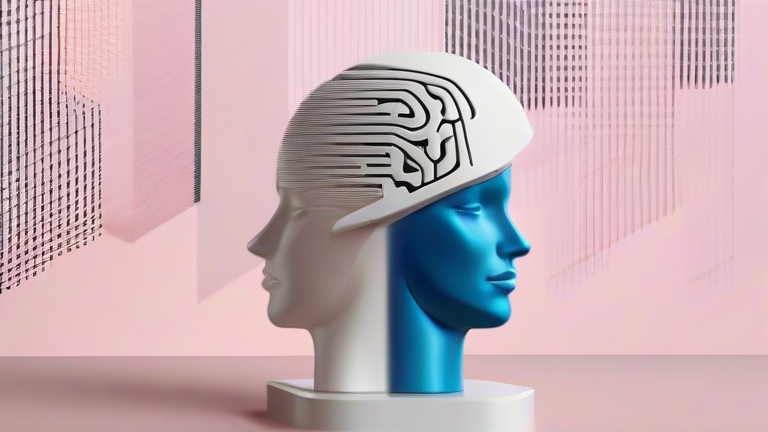
TL;DR: AI will not replace human thought, but it will reshape it—forcing us to become better editors, synthesizers, and question-askers rather than mere memorizers. The future of cognition is not about outsourcing intelligence, but about upgrading our ability to navigate complexity with AI as a cognitive sparring partner.
The Slow Travel of the Mind
I recently spent three weeks in Kyoto, disconnected from my usual digital scaffolding. No translation app for menus, no AI itinerary planner, no autocomplete for my half-remembered Japanese. The first two days were frustrating—I felt slower, clumsier, less capable. But by the third day, something shifted. My brain began to rewire itself for the texture of the unknown. I learned to read body language instead of screens, to memorize streets by their smells and angles rather than GPS pins. That trip taught me a crucial lesson: cognitive ability is not a fixed inheritance. It is a muscle that atrophies when we outsource it, and it flexes when we let difficulty back in.
If you want to dig deeper, check out our guide on Why I Skipped Buying New Gadgets: The Case for Your Old Lapt.
As AI becomes ubiquitous—writing our emails, summarizing our books, even suggesting our travel routes—we risk entering a cultural amnesia of the mind. The convenience is undeniable, but so is the cost. Consider the “Google effect”: we no longer remember facts; we remember where to find them. AI accelerates this tendency to an extreme. Why retain a recipe, a historical date, or a philosophical argument when ChatGPT can conjure it in seconds? The danger is not that we lose trivia, but that we lose the *process* of thought—the slow, messy, beautiful struggle of connecting disparate ideas.
Curating, Not Creating
The future of human thought, then, is not about competing with AI on speed or recall. It is about becoming curators of attention. Think of a chef who uses a sous-vide machine: the tool does the precise temperature control, but the chef still decides on flavor, texture, and presentation. Similarly, AI can generate drafts, patterns, and possibilities, but the *human* must decide what matters. This is the personal growth angle: we are shifting from being producers of raw content to being editors of meaning. In practice, this means asking better questions. Instead of “What are the top 10 things to do in Rome?” we ask, “What would a Roman architect who hated tourists recommend?” The quality of your thinking now depends on the quality of your prompts—to both machines and to yourself.
This is where travel and food become powerful metaphors. When you travel, you don’t just consume a destination; you engage with its contradictions. AI can list the best ramen shops, but it cannot taste the broth’s umami depth or feel the steam on your face. That embodied, sensory, culturally-embedded knowledge is irreducibly human. The same applies to our cognitive future: AI will handle the heavy lifting of data processing, but the *wisdom*—the ability to judge, to empathize, to appreciate irony—remains our domain. The key is to use AI as a travel companion, not a tour guide. Let it suggest routes, but you decide which detours to take.
The Slow Thought Movement
So, what does this mean for your daily life? It means intentionally creating “slow thought” zones—times when you write by hand, read deeply without highlighting, or walk without a podcast. It means treating AI as a sparring partner, not a replacement. Challenge its answers, ask for alternatives, demand contradictions. The future of human thought is not a race against machines; it is a reclamation of the messy, nonlinear, joyful process of thinking itself. The best way to prepare is not to download more apps, but to cultivate more curiosity—and to remember that the most powerful cognitive tool you own is your own attention.
FAQ
Q: Will AI make us dumber over time?
A: Not inevitably, but only if we passively outsource all mental effort. If you use AI to generate ideas and then critically evaluate, combine, and refine them, you actually strengthen higher-order thinking. The risk is when you accept AI output without questioning—
Leave a Reply