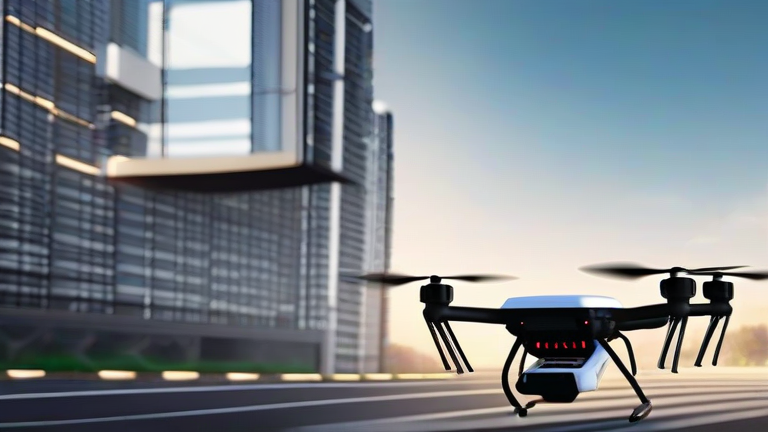
Autonomous Delivery Drones: Integrating With Urban Air Traffic
TL;DR: Autonomous delivery drones are successfully integrating with urban air traffic through advanced 5G-enabled remote ID systems and AI-driven dynamic rerouting algorithms. This integration enables safe, sub-10-minute parcel delivery by coordinating with ground infrastructure and existing aviation corridors in real-time.
The landscape of last-mile logistics is undergoing a radical transformation as autonomous delivery drones move from experimental trials to commercial viability. The primary challenge has never been the drones themselves, but rather their seamless integration into the dense, complex environment of urban airspace. Recent developments have focused on creating a digital twin of the city’s sky, allowing fleet management systems to predict and mitigate conflicts before they occur. This technological leap is driven by the urgent need for faster, more sustainable delivery options in metropolitan areas where traffic congestion plagues traditional ground-based logistics.
If you want to dig deeper, check out our guide on AI Agents Auto-Negotiate Bills & Subscriptions for You.
Leading manufacturers are rolling out new fleet models that prioritize vertical takeoff and landing capabilities alongside enhanced sensory arrays. The latest specifications for commercial delivery drones typically feature a maximum payload capacity of 20 to 25 kilograms, sufficient for most consumer goods. These units boast a range of 15 to 20 kilometers on a single charge, with flight times extending up to 40 minutes. Crucially, they are equipped with LiDAR, radar, and high-resolution optical cameras that work in tandem to detect obstacles with centimeter-level precision. Battery technology has also advanced significantly, with solid-state lithium batteries offering higher energy density and faster charging cycles, reducing turnaround times at depots to under five minutes.
The integration with urban air traffic relies heavily on Network Air Traffic Management (NATM) systems. Unlike traditional aviation, which uses voice-based communication, drone traffic management utilizes data links via 5G networks to share position, velocity, and intent data instantly. This allows for a shift from separation-based to performance-based operations, where drones can fly closer to each other and buildings safely. Regulatory bodies like the FAA and EASA are now certifying these corridors, ensuring that delivery drones do not interfere with emergency medical flights or recreational aviation. The industry impact is profound, as logistics giants are projecting a 30% reduction in last-mile costs within three years. Furthermore, the reduction in diesel truck emissions aligns with global sustainability goals, making drone delivery a key component of green city initiatives.
However, public acceptance remains a hurdle. Noise reduction is a critical engineering focus, with newer rotors designed to operate below 60 decibels at a 100-foot distance. This quiet operation helps alleviate community concerns, paving the way for broader deployment. As the infrastructure matures, we can expect a hybrid model where drones handle high-value, time-sensitive packages, while larger trucks manage bulk goods, creating a synergistic logistics network.
FAQ
Q: How do drones avoid colliding with manned aircraft?
A: They use ADS-B receivers to detect nearby aircraft and AI algorithms to automatically yield or reroute according to strict right-of-way protocols.
Q: What is the maximum speed of commercial delivery drones?
A: Most current models operate at speeds between 40 and 60 kilometers per hour to balance speed with safety and battery efficiency.
Q: Are drone deliveries currently legal in all cities?
A: No, regulations vary by region, but many major metropolitan areas are currently operating under specific waivers or within designated air corridors.
Leave a Reply