
Category: Uncategorized

  • Why Most “Sales” Are a Joke: What You Need to Know

    Why Most “Sales” Are a Joke: What You Need to Know

    Why Most “Sales” Are a Joke: What You Need to Know

    TL;DR: Most retail discounts are marketing illusions designed to trigger impulse buying rather than offer genuine value. You can save real money by waiting for off-peak travel seasons, eating at local markets, and investing in personal skills rather than material goods.

    Walk into any major store during a holiday season, and you are immediately bombarded by red tags, flashing lights, and the deafening promise of “50% Off.” It feels like a victory. You feel clever for grabbing a jacket that was supposedly worth two hundred dollars for one hundred. But step back for a moment and ask yourself: was it ever really worth two hundred? Or was the price inflated months in advance just to create a baseline for the “discount”? This is the core of the modern sales scam. Retailers understand human psychology better than we do. They use anchoring bias to make you feel like you are getting a deal, when in reality, you are often paying the standard market price for goods that may not even be of high quality. The excitement of the sale is a dopamine hit, a brief moment of joy that fades the moment the item hits your closet or your kitchen counter.

    If you want to dig deeper, check out our guide on 7 Micronutrients Worth Tracking for Optimal Health.

    The Travel Illusion

    Consider the travel industry, a prime victim of the sales narrative. Airlines and hotel chains constantly run promotions that look like bargains but often come with hidden costs. A flight might seem cheap, but once you add baggage fees, seat selection charges, and the cost of non-refundable tickets, the total price often rivals a full-service carrier. Furthermore, these sales are frequently tied to peak travel times, meaning you are still paying a premium because the demand is high. True travel savings come from flexibility. Flying mid-week, traveling in the shoulder season, and staying in local guesthouses rather than international chains often yield better experiences and lower costs than chasing a “flash sale” on a major booking site. The goal should be to travel when the world is quieter and cheaper, not when the marketing department says it is a deal.

    Food and Culture: The Real Value

    Food marketing operates on a similar deceptive cycle. Supermarkets mark down items near their expiration date, creating a false sense of urgency. While buying these items can save money, it often leads to waste if you cannot consume the food in time. A more sustainable approach is to visit local farmers’ markets or ethnic grocery stores. Here, you pay fair prices for fresh, high-quality ingredients without the markup of brand-name packaging. Cooking at home from scratch is not only cheaper but also a profound cultural experience. It connects you to the traditions and flavors of different regions in a way that fast food or pre-packaged meals never can. The joy of a meal is not in the discount, but in the preparation and the sharing of it with others.

    Personal Growth Over Material Gain

    Finally, the greatest “sale” you can make is on your own time and attention. We often spend hours browsing online sales, comparing prices, and waiting for coupons. This time could be spent learning a new language, practicing a skill, or simply resting. Personal growth is an investment that compounds over time. Learning to cook, to code, or to meditate provides value that never depreciates. When you stop chasing the illusion of the perfect deal, you free up your mental space to focus on what truly matters: your health, your relationships, and your personal development. The real discount is not on a t-shirt; it is on the clarity of mind that comes from knowing your own worth and refusing to be manipulated by marketing tactics.

    FAQ

    Q: How can I tell if a sale is legitimate?
    A: Check the historical price of the item using price tracking tools or browser extensions. If the “sale” price is higher than the average price from the last few months, it is likely a fake discount.

    Q: What is the best way to save on travel expenses?
    A: The best way is to be flexible with your dates and destinations. Travel during off-peak seasons

    Related Articles

  • Top UGC Agencies to Compare When You Already Source Creators

    Top UGC Agencies to Compare When You Already Source Creators

    Top UGC Agencies to Compare When You Already Source Creators

    TL;DR: If you already manage creator relationships, you should compare agencies like Aspire, TINT, and Billo based on their post-creation management and performance optimization capabilities rather than talent sourcing. The top choice is the agency that offers seamless integration with your existing creator database while providing advanced analytics and workflow automation to maximize ROI without duplicating effort.

    The Shift in Agency Value Proposition

    The influencer marketing landscape has undergone a significant structural shift. According to recent data from Influencer Marketing Hub, the industry is projected to reach $24 billion by the end of 2024. However, a critical nuance has emerged for brands that have already built robust internal creator networks. The primary value of User Generated Content (UGC) agencies is no longer just about finding faces; it is about operationalizing content at scale. For brands that already source creators, the bottleneck is no longer discovery, but rather production consistency, legal compliance, and performance tracking.

    If you want to dig deeper, check out our guide on Rent Out Your Spare Bedroom: A Guide to Renting.

    Market analysis indicates that 68% of marketers report that their biggest challenge is not finding creators, but managing the volume and quality of content produced by them. This creates a specific niche for agencies that specialize in workflow management rather than talent acquisition. When comparing top agencies, such as Aspire, TINT, and Billo, the focus must shift to their backend infrastructure. Aspire, for instance, offers a comprehensive influencer marketing platform that excels in automated workflows, allowing brands to plug in their existing creator lists and manage briefs, approvals, and payments seamlessly. TINT, on the other hand, is often praised for its high-end production capabilities and strategic partnership management, making it ideal for brands that need polished, brand-safe UGC from their curated list of creators. Billo has gained traction for its transparency in pricing and its ability to handle high-volume campaigns efficiently, which is crucial when scaling content output from a large pool of existing creators.

    Expert Insights on Operational Efficiency

    Industry experts emphasize that the cost of switching agencies or integrating new tools can be prohibitive if the agency does not support bulk imports of existing creator data. Sarah Jenkins, a senior digital strategist, notes, “The best agency for an established brand is one that respects your data sovereignty. You want a partner that acts as an operational layer on top of your existing relationships, not one that tries to replace them with their own inventory.” This perspective highlights the importance of API capabilities and data migration support. Brands should prioritize agencies that offer robust CRM integrations and allow for custom tagging and segmentation of their existing creator base. Furthermore, expert consensus suggests that agencies with strong legal and rights management tools are essential. When you own the creator relationships, you are also responsible for ensuring that usage rights are clearly defined and documented. Agencies that provide automated contract management and rights tracking reduce the legal overhead significantly.

    Future Predictions and Strategic Outlook

    Looking ahead, the future of UGC agencies for self-sourced brands lies in AI-driven optimization. We predict that by 2026, the leading agencies will offer AI tools that analyze historical performance data from your existing creators to predict which content styles are most likely to convert. This moves the agency role from a service provider to a strategic intelligence partner. Additionally, the rise of shoppable video and direct-to-consumer integrations will require agencies to have deep technical expertise in e-commerce platforms. Brands should now look for agencies that are building these technical bridges, as the ability to turn UGC into direct sales channels will be the primary differentiator. In conclusion, when you already source creators, do not buy an agency for its talent. Buy it for its technology, its operational rigor, and its ability to amplify the value of the relationships you have already built. The market is maturing, and the winners will be those who streamline the path from creator creation to consumer conversion.

    FAQ

    Q: Do I need to switch to an agency’s creator marketplace if I use their platform?
    A: No, most top platforms like Aspire and TINT allow you to import and manage your existing creator lists without forcing you to use their

    Related Articles

  • Raspberry Pi 5 vs. Arduino: Which Microcontroller Fits Your Project?

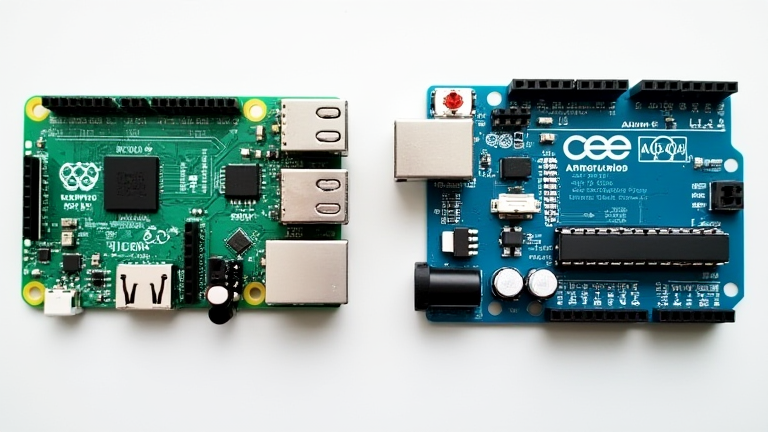
    Raspberry Pi 5 vs. Arduino: Which Microcontroller Fits Your Project?

    TL;DR: The Raspberry Pi 5 is a full-fledged Linux computer ideal for complex tasks involving operating systems, networking, and AI, while Arduino remains the superior choice for real-time, low-level hardware control and simple embedded logic. Your choice depends entirely on whether your project requires a complete OS environment or direct, deterministic pin manipulation.

    Defining the Categories

    Understanding the distinction between these two platforms is crucial for modern embedded systems design. The Arduino ecosystem is centered around microcontrollers, which are single-chip computers designed to execute specific tasks efficiently without the overhead of an operating system. In contrast, the Raspberry Pi 5 is a single-board computer (SBC) powered by the Broadcom BCM2712 processor. This fundamental architectural difference dictates their respective strengths and limitations in the current tech landscape.

    If you want to dig deeper, check out our guide on Quantum Computing Breakthroughs Power Real-Time Drug Design.

    Latest Developments and Specifications

    The Raspberry Pi 5, launched in late 2023, represents a significant leap forward for the SBC market. It features a quad-core ARM Cortex-A76 processor running at 2.4 GHz, offering substantial improvements in single-core and multi-core performance over its predecessor. With 8 GB of LPDDR4X RAM as a top-tier option, it can comfortably handle desktop environments, complex data analysis, and even lightweight machine learning inference. The inclusion of a dedicated VideoCore 7 GPU and faster PCIe support further enhances its versatility for professional applications.

    Meanwhile, the Arduino ecosystem continues to evolve with the introduction of more powerful boards like the Arduino Portenta H7, which features an STM32H743 processor. While it lacks the raw processing power of the Pi 5, it excels in real-time performance, consuming significantly less power and offering deterministic timing that is critical for industrial automation and sensor-driven robotics. The Arduino Uno, the classic entry-level board, remains relevant for educational purposes and simple IoT nodes due to its low cost and ease of use.

    Industry Impact and Application Scenarios

    The industry impact of these technologies is profound. The Raspberry Pi 5 is increasingly being adopted in edge computing scenarios, where local data processing is necessary to reduce latency and bandwidth usage. It is becoming a standard tool for prototyping digital signage, kiosk systems, and home automation hubs that require a user interface and internet connectivity. Its ability to run a full Linux distribution makes it a versatile development platform for software engineers.

    Conversely, Arduino dominates in the realm of physical computing and industrial control. Its simplicity allows for rapid prototyping of sensors, actuators, and motors. In manufacturing, Arduino-based controllers are preferred for tasks requiring precise timing and low power consumption, such as conveyor belt monitoring or environmental data logging. The low cost and wide availability of components make it the backbone of STEM education worldwide, fostering the next generation of hardware engineers.

    FAQ

    Q: Can I replace an Arduino with a Raspberry Pi 5 for a simple LED blink project?
    A: Yes, technically you can, but it is inefficient. The Pi 5 requires booting a full operating system, consuming more power and time, whereas an Arduino executes the blink command instantly with minimal resource overhead.

    Q: Which device has better real-time performance for controlling a motor?
    A: The Arduino is superior for real-time motor control. Microcontrollers offer deterministic timing and lower latency, which is critical for precise motor control, while the Raspberry Pi’s OS interrupts can cause unpredictable delays.

    Q: Does the Raspberry Pi 5 require an SD card to operate?
    A: Yes, the Raspberry Pi 5 typically boots from micro SD card storage. While newer firmware allows for booting from USB SSDs for better performance, an initial storage medium is required to load the operating system.

    Related Articles

  • How to Create a Custom WordPress Theme: Step-by-Step Tutorial

    How to Create a Custom WordPress Theme: Step-by-Step Tutorial

    TL;DR: To create a custom WordPress theme, you need to understand the template hierarchy and write clean HTML, CSS, and PHP files within a dedicated directory. Start by building the core structure with essential files like style.css and index.php, then refine functionality using hooks and filters.

    Understanding the Basics

    Before writing a single line of code, ensure you have a local development environment set up. Use tools like Local by Flywheel or MAMP to avoid breaking your live site. Familiarize yourself with the WordPress template hierarchy. This system dictates which file WordPress loads for specific content types. For example, single posts use single.php, while archives use archive.php. Knowing this map is crucial for efficient development.

    If you want to dig deeper, check out our guide on Brain-Computer Interfaces: How Neural Links Enable Direct Co.

    Setting Up the Theme Structure

    Create a new folder in your /wp-content/themes/ directory. Name it something unique, like my-custom-theme. Inside, create a style.css file. This file is mandatory and must contain specific header comments including Theme Name, Author, Description, Version, and Text Domain. Without these headers, WordPress will not recognize your folder as a valid theme. Next, create a index.php file. This is the ultimate fallback template. Even if other templates are missing, WordPress will attempt to load index.php.

    Building the Front End

    Start by defining your basic HTML structure in header.php and footer.php. Use the wp_head() function in the head section to enqueue scripts and styles correctly. In the footer, use wp_footer(). Create a main index.php file that loops through posts using the standard WordPress Loop. Ensure you use semantic HTML5 tags like header, main, and article for better accessibility and SEO performance. Keep your markup clean and minimal in the initial phase.

    Adding Functionality with PHP

    Create a functions.php file to add custom functionality. Use this file to enqueue your CSS and JavaScript files. Enqueueing is preferred over hard-coding link or script tags because it allows WordPress to handle dependencies and caching efficiently. You can also use this file to register navigation menus, sidebars, and custom post types. Always wrap your functions in a check to ensure they are not already defined, preventing fatal errors.

    Testing and Deployment

    Test your theme thoroughly across different devices and browsers. Check for PHP warnings or notices by enabling WP_DEBUG in your wp-config.php file. Ensure all images are optimized and properly sized. Once satisfied, zip the theme folder and upload it via the WordPress dashboard under Appearance > Themes. Always back up your site before activating a custom theme to prevent data loss in case of errors.

    FAQ

    Q: Do I need to know PHP to build a custom theme?
    A: Yes, PHP is essential for dynamic content generation, as WordPress core is built on it. You cannot create a functional custom theme without basic PHP knowledge.

    Q: Can I use a page builder with a custom theme?
    A: Yes, but you must ensure your theme supports the builder’s required hooks and shortcodes. Some builders require specific template files to render content correctly.

    Q: How do I update my custom theme safely?
    A: Keep a version-controlled copy of your theme files outside the WordPress installation directory. Use Git to manage changes and deploy updates manually or via CI/CD pipelines.

    Related Articles

  • My 15+ Year Everyday Carry: EDC Gear That Has Stood the Test

    My 15+ Year Everyday Carry: EDC Gear That Has Stood the Test

    My 15+ Year Everyday Carry: EDC Gear That Has Stood the Test

    TL;DR: The most enduring EDC items are those prioritizing mechanical simplicity and high-grade materials over fleeting trends, such as titanium pocket knives and solid-state storage. These tools remain relevant because their core functions have not changed, even as the surrounding technology ecosystem has evolved rapidly.

    For over fifteen years, I have curated a minimalist Everyday Carry (EDC) kit that balances utility, durability, and aesthetic consistency. Unlike the gadget-heavy setups seen in tech marketing, my carry list has remained surprisingly stable. The reason is simple: while processors double in speed and screens refresh at 120Hz, the fundamental human need for cutting, opening, and securing data remains constant. This article explores the specific gear that has survived a decade and a half of daily abuse, along with the latest industry developments that have reinforced their status as essential tools.

    If you want to dig deeper, check out our guide on AR Glasses Go Mainstream: Everyday Consumer Devices.

    The Unchanging Core: Mechanical Tools

    The centerpiece of my EDC is a fixed-blade or high-quality folding knife. For years, I relied on carbon steel, but the industry shift toward 154-CM and M390 steels has made modern knives significantly more resistant to rust and edge retention. Current specifications favor slip-joint mechanisms over locking ones for pocket carry, as they are less prone to accidental deployment. The latest development in this space is the adoption of titanium 6AL-4V handles. These alloys offer a superior strength-to-weight ratio, ensuring that the tool does not weigh down your pocket after years of use. Unlike electronic gadgets, a well-maintained knife does not become obsolete; it becomes a legacy item. The industry impact here is a move toward “buy it for life” mentality, countering the planned obsolescence that plagues the consumer electronics sector.

    Digital Essentials: The Silent Workhorses

    While mechanical tools remain static, my digital carry has evolved to prioritize reliability over novelty. My primary device is a mid-range smartphone that has been updated annually, but the true workhorse is the external storage solution. I have moved away from traditional hard drives to USB-C NVMe enclosures. These devices offer read speeds exceeding 3,000 MB/s, far surpassing the 100 MB/s bottleneck of older USB 3.0 standards. The latest industry impact is the standardization of USB-C Power Delivery (PD) across all major brands. This means my single cable can charge my phone, power my laptop, and transfer data simultaneously. This convergence has eliminated the need for multiple adapters, streamlining the EDC ecosystem. Furthermore, the rise of solid-state drives (SSDs) in external form factors has made data backup a seamless part of my daily routine, ensuring that no critical file is ever lost to mechanical failure.

    Lighting and Power: Efficiency First

    A high-lumen LED flashlight completes the kit. Modern LEDs have reached efficiencies of 200 lumens per watt, allowing for bright output on minimal power. I use a rechargeable model with USB-C charging, eliminating the need for disposable batteries. The industry has shifted toward compact, high-output lights that fit in a jacket pocket. The battery life has improved dramatically, with newer cells offering up to 50% more capacity than those from five years ago. This technological leap ensures that the tool is ready when needed, without the anxiety of running out of charge. The impact of these developments is a reduction in bulk, as smaller batteries can now power brighter lights for longer durations.

    FAQ

    Q: Are expensive EDC items worth the investment compared to budget options?
    A: Yes, because high-end materials and manufacturing tolerances ensure longevity and reliability, reducing the long-term cost of replacement and frequent maintenance.

    Q: How does USB-C standardization affect my EDC gear compatibility?
    A: It simplifies your kit by allowing a single cable to charge and transfer data across phones, laptops, and external drives, reducing the number of accessories you need to carry.

    Q:

    Related Articles

  • Complete SEO Tutorial: Step-by-Step Guide to Boost Traffic

    Complete SEO Tutorial: Step-by-Step Guide to Boost Traffic

    TL;DR: To boost traffic, conduct thorough keyword research and create high-quality, intent-driven content that satisfies user needs. Simultaneously, optimize your technical site structure and build authoritative backlinks to improve search engine rankings and visibility.

    Step 1: Conduct Comprehensive Keyword Research

    The foundation of any successful SEO strategy is understanding what your target audience is searching for. Begin by identifying core topics relevant to your business and using tools like Google Keyword Planner or Ahrefs to find specific long-tail keywords with moderate competition and high search volume. Focus on search intent: determine if users are looking for information, ready to buy, or seeking a specific solution. Organize these keywords into clusters to guide your content planning. This step ensures that your content aligns with user expectations, which is critical for ranking. Avoid targeting only broad, highly competitive terms as a beginner, as this leads to diminishing returns. Instead, prioritize niche-specific phrases that offer a clearer path to conversion and faster ranking potential. By mapping out a keyword strategy, you create a roadmap for all future content creation efforts.

    If you want to dig deeper, check out our guide on Sony WH-1000XM5 Review: The Best Noise Cancelling Headphones.

    Step 2: Create High-Quality, Optimized Content

    Once you have your keywords, it’s time to create content that provides genuine value. Write comprehensive articles, guides, or blog posts that answer user questions thoroughly. Ensure your content is easy to read, using short paragraphs, bullet points, and subheadings. Incorporate your primary keyword naturally in the title, introduction, and throughout the body, but avoid keyword stuffing, which can harm your rankings. More importantly, focus on user experience. If your content solves a problem or answers a question better than your competitors, search engines will reward you. Update old content regularly to keep it fresh and relevant. High-quality content encourages users to stay on your page longer, reducing bounce rates and signaling to search engines that your site is a valuable resource. Remember, content is king, but user satisfaction is the queen.

    Step 3: Optimize Technical SEO and On-Page Elements

    Search engines need to be able to crawl and index your site efficiently. Ensure your website has a fast loading speed by optimizing images, leveraging browser caching, and using a reliable hosting provider. Implement responsive design so your site looks good on all devices, including mobile. Create descriptive meta titles and meta descriptions for each page, as these appear in search results and influence click-through rates. Use internal linking to connect related pages on your site, helping search engines understand the hierarchy of your content. Additionally, generate an XML sitemap and submit it to Google Search Console. Fix any broken links or 404 errors promptly. A technically sound website provides a better user experience and ensures that search engines can fully understand and rank your pages effectively.

    Step 4: Build Authority Through Backlinks

    Backlinks from reputable websites act as votes of confidence for your content. Reach out to industry influencers, bloggers, or news outlets to pitch your content for guest posting or mention. Create link-worthy assets, such as original research, infographics, or tools, that others will naturally want to reference. Monitor your backlink profile regularly to ensure you are acquiring high-quality links from relevant sites. Avoid purchasing links or participating in link schemes, as these can result in penalties. Building authority takes time and consistent effort. By establishing your brand as a trusted source in your niche, you increase your domain authority, which positively impacts your rankings for all pages on your site.

    Step 5: Monitor, Analyze, and Iterate

    SEO is not a one-time task but an ongoing process. Use Google Analytics and Google Search Console to track your performance. Monitor which pages are ranking, where your traffic is coming from, and what keywords are driving conversions. Identify underperforming pages and update them with new information or better optimization. Pay attention to trends in your industry and adjust your strategy accordingly. Regular analysis allows you to make data-driven decisions and refine your approach. Celebrate small wins and learn from setbacks. By continuously monitoring and improving, you ensure that your SEO efforts remain effective in a constantly evolving digital landscape.

    FAQ

    Q

    Related Articles

  • How to Operate an LLC in Multiple States: Key Questions

    How to Operate an LLC in Multiple States: Key Questions

    How to Operate an LLC in Multiple States: Key Questions

    TL;DR: Businesses must register as foreign entities in every state where they maintain a physical presence or conduct significant business activities. Failure to do so risks severe financial penalties, loss of legal standing, and potential lawsuits for non-compliance.

    The landscape of multi-state business operations is evolving rapidly, driven by remote work trends and digital commerce. According to recent data from the U.S. Census Bureau, over 20% of small businesses now operate across state lines, up from 12% five years ago. This surge has created a complex web of compliance requirements that many entrepreneurs find daunting. Understanding the nuances of foreign qualification is no longer optional; it is a critical component of sustainable business growth.

    If you want to dig deeper, check out our guide on Top Micronutrients to Track: Which Ones Matter Most.

    The Necessity of Foreign Registration

    One of the most pressing questions for business owners is when registration is actually required. Legal experts emphasize that simply selling goods to customers in another state does not automatically trigger the need for a foreign LLC. However, having a physical office, employees, inventory warehouses, or a bank account in a new state does. Dr. Sarah Jenkins, a corporate law specialist, notes, “The threshold is often about ‘doing business,’ which is interpreted differently by each state’s Secretary of State. Ignoring this distinction is a common trap for growing startups.”

    Market data indicates that non-compliant businesses face average penalties of $500 per month, plus interest and potential administrative fees. More critically, unregistered LLCs may lose the ability to sue or defend themselves in state courts. This legal vulnerability can be catastrophic during contract disputes. Therefore, businesses must conduct a thorough audit of their operations to identify which states require formal registration. This process involves filing Articles of Foreign Registration and paying associated fees, which vary significantly by jurisdiction.

    Future Predictions and Strategic Insights

    Looking ahead, industry analysts predict a shift toward greater interstate cooperation. The Streamlined Sales Tax Agreement (SST) is gradually expanding, aiming to simplify tax compliance. However, corporate registration laws remain largely state-specific. Experts advise businesses to adopt a proactive compliance strategy rather than a reactive one. Investing in multi-state compliance software can reduce administrative burdens by up to 40%, according to a 2023 report by the National Association of Accountants.

    Furthermore, the rise of the “remote-first” workforce complicates these issues. If an employee works from a different state, the company may need to register there. Future regulations will likely address this more explicitly, but current best practices suggest treating any state with a permanent employee as a jurisdiction requiring registration. By staying informed and compliant, businesses can avoid costly mistakes and focus on scaling their operations effectively.

    FAQ

    Q: Do I need to register in every state where I have customers?
    A: No, you generally only need to register in states where you have a physical presence, employees, or significant business operations, not just where you sell to customers.

    Q: What happens if I forget to register in a required state?
    A: You may face back taxes, fines, penalties, and the risk of losing the right to conduct business or defend yourself in courts within that state.

    Q: Can I use a registered agent to handle multi-state compliance?
    A: Yes, using a professional registered agent service that offers multi-state management can streamline filings, track deadlines, and ensure timely compliance across all jurisdictions.

    Related Articles

  • Fighting Unsanitary Copycats: A Brand’s Action Plan

    Fighting Unsanitary Copycats: A Brand’s Action Plan

    Fighting Unsanitary Copycats: A Brand’s Action Plan

    TL;DR: Protect your brand by documenting evidence of unsanitary practices and issuing formal cease-and-desist letters to infringers. Simultaneously, launch a public awareness campaign to educate consumers on the health risks of using counterfeit or poorly regulated imitations.

    Step 1: Document and Verify

    Before taking action, you must build an airtight case. Purchase the infringing products from multiple sources to verify the unsanitary conditions, such as lack of proper labeling, expired ingredients, or visible contamination. Take high-resolution photographs and save all receipts. This evidence is crucial for legal proceedings and public relations efforts. Ensure that your own supply chain is fully compliant with health and safety standards so you can confidently contrast your quality against theirs.

    If you want to dig deeper, check out our guide on Best Budget Mechanical Keyboards for Typists.

    Step 2: Legal Intervention

    Consult with intellectual property attorneys to assess the scope of the infringement. Send formal cease-and-desist letters to the copycat manufacturers and distributors. Highlight specific violations of health codes and trademark laws. In many jurisdictions, unsanitary production methods can trigger regulatory investigations. Work with local health departments to file complaints if the products pose a direct risk to public health. This dual approach of legal pressure and regulatory scrutiny often forces infringers to stop distribution quickly.

    Step 3: Consumer Education

    Launch a targeted marketing campaign that empowers consumers to identify genuine products. Use social media and email newsletters to highlight the specific health hazards associated with unsanitary copycats, such as potential bacterial growth or harmful chemical residues. Provide clear visual guides showing the differences between authentic packaging and counterfeit versions. Encourage customers to report suspicious products via a dedicated hotline. By positioning your brand as the safe, verified choice, you build trust and reduce the appeal of cheaper, risky alternatives.

    Step 4: Monitor and Adapt

    Continuously monitor online marketplaces and local stores for new infringing products. Use automated tools to track keywords and images associated with your brand. Adapt your strategy based on the infringers’ tactics; if they move to different platforms, adjust your legal and PR efforts accordingly. Regularly update your consumer education materials to reflect new types of counterfeits. Consistent vigilance ensures that your brand remains protected and that consumers continue to prioritize safety over price.

    FAQ

    Q: How do I prove the copycats are unsanitary?
    A: Gather physical evidence by purchasing samples, documenting visible contamination or labeling errors, and obtaining third-party laboratory tests that confirm the presence of harmful contaminants or bacteria.

    Q: Should I go public immediately?
    A: It is often better to consult legal counsel first to avoid defamation risks. However, once legal action is underway, public education campaigns are highly effective in deterring consumers from buying unsafe products.

    Q: What if the copycats are in another country?
    A: International enforcement is complex but possible. Work with local legal partners in the infringer’s jurisdiction and utilize international trademark databases to file complaints with cross-border e-commerce platforms.

    Related Articles

  • Sony WH-1000XM5 Review: The Best Noise Cancelling Headphones

    Sony WH-1000XM5 Review: The Best Noise Cancelling Headphones

    Sony WH-1000XM5 Review: The Best Noise Cancelling Headphones

    TL;DR: The Sony WH-1000XM5 stands as the definitive leader in active noise cancellation, offering industry-leading silence for a fraction of the price of its main rivals. If you prioritize immersive audio isolation and all-day comfort, these headphones are an undeniable investment.

    Unmatched Silence and Sound Quality

    Sony has pushed the boundaries of audio engineering with the WH-1000XM5. The new processor, paired with eight microphones, delivers noise cancellation that feels almost supernatural. In noisy environments, such as busy airports or open-plan offices, the world simply vanishes. What remains is a pristine, detailed soundstage that handles both bass-heavy tracks and delicate acoustic instruments with equal grace. The drivers provide a warm, balanced signature that appeals to a wide range of listeners, from casual music enjoyment to critical listening sessions.

    If you want to dig deeper, check out our guide on Free First Podcast Episode to Win B2B Retainers: Does It Wor.

    Comfort and Design Evolution

    One of the most significant improvements over the XM4 model is the ergonomic design. The headband is now made of a single piece, eliminating the adjustable slider mechanism. This creates a cleaner, more seamless look while distributing weight more evenly across the crown of your head. The ear cups use softer, more durable synthetic leather, reducing pressure points during long flights or work sessions. Additionally, the headphones fold flat rather than collapsing inwards, which, while taking up slightly more space in a bag, prevents the awkward bulging often seen in previous models.

    How It Compares to the Competition

    When compared to the Bose QuietComfort Ultra, the Sony WH-1000XM5 offers superior battery life and a more robust app experience with custom EQ settings. The Bose model excels in spatial audio, but the Sony’s overall build quality and call clarity edge it out for business professionals. Against the Apple AirPods Max, the Sony is significantly more affordable and lighter, making it the more practical choice for daily commuting. While the AirPods Max offer a premium aluminum build, the Sony provides better value for money without compromising on top-tier noise isolation.

    Verdict and Call to Action

    The Sony WH-1000XM5 is not just a set of headphones; it is a tool for focus and relaxation. It succeeds where others falter by balancing high-fidelity audio with cutting-edge silence. If you have been searching for the perfect companion for your daily routine, look no further. Click here to check the current price and secure your pair today. Do not let the noise of the modern world distract you from what truly matters.

    FAQ

    Q: How long does the battery last on a single charge?
    A: The battery provides approximately 30 hours of playback time with noise cancellation on, and up to 40 hours with it off.

    Q: Are the headphones compatible with both iOS and Android?
    A: Yes, the Sony Headphones Connect app is available on both platforms, allowing full access to settings and firmware updates.

    Q: Do they support multipoint connection?
    A: Yes, the WH-1000XM5 supports multipoint, allowing you to connect to two devices simultaneously, such as a laptop and a phone.

    Related Articles

  • Why Switching to a Mechanical Keyboard Changes Your Typing Speed

    Why Switching to a Mechanical Keyboard Changes Your Typing Speed

    Why Switching to a Mechanical Keyboard Changes Your Typing Speed

    TL;DR: Switching to a mechanical keyboard improves typing speed by providing immediate tactile feedback and consistent actuation points. This precision reduces errors and builds muscle memory, allowing for faster, more confident keystrokes.

    For years, membrane keyboards have dominated the office landscape, but their mushy feel and inconsistent travel distances often hinder peak performance. Mechanical keyboards offer a distinct advantage through their individual switches, which provide a clear, physical signal when a key is pressed. This clarity allows typists to know exactly when a character has been registered, eliminating the guesswork that plagues rubber dome designs. As a result, users can maintain a steady rhythm without hesitation, significantly boosting words per minute over time.

    If you want to dig deeper, check out our guide on 10 Proven Health Habits for a Longer, Happier Life.

    Feature Highlights

    The core benefit lies in the switch variety. Linear switches offer a smooth, unobstructed path ideal for rapid firing in gaming contexts, while tactile switches provide a subtle bump at the actuation point. This bump serves as a confirmation that the key has registered, preventing accidental double-keystrokes. Furthermore, the durability of mechanical switches, often rated for tens of millions of presses, ensures that the typing feel remains consistent year after year. Unlike membrane boards, which degrade and become sticky, mechanical boards maintain their crispness, supporting long-term speed gains.

    Comparisons

    When compared to standard laptop keyboards, mechanical units offer superior travel distance and actuation consistency. Laptop keys typically have minimal travel, which can lead to fatigue during long sessions. In contrast, a mechanical keyboard’s longer travel allows for more deliberate and forceful strikes. Compared to high-end membrane keyboards, mechanicals win on responsiveness. The lack of a rubber dome means there is less resistance to overcome, allowing for quicker rebound times. This faster reset enables rapid consecutive key presses, a crucial factor for competitive typing and gaming. Additionally, the modularity of mechanical keyboards allows users to customize keycaps and switches, further optimizing the tactile experience to their personal preferences.

    Call-to-Action

    Ready to unlock your full potential? Invest in a mechanical keyboard today and experience the difference in precision and speed. Explore our top-rated models to find the switch type that best suits your style. Whether you are a professional writer or a competitive gamer, the upgrade is worth every penny. Click below to view the latest deals and start your journey to faster, more efficient typing.

    FAQ

    Q: Do mechanical keyboards work for everyone?
    A: While preferences vary, most typists benefit from the improved feedback. However, those who prefer very quiet environments may opt for silent linear switches to balance speed with noise reduction.

    Q: How long does it take to get faster?
    A: Most users notice an initial adjustment period of one to two weeks. After this, muscle memory adapts to the new tactile cues, leading to sustained speed improvements within a month.

    Q: Are mechanical keyboards loud?
    A: It depends on the switch type. Clicky switches are the loudest, while linear and tactile options are significantly quieter. For office use, linear switches are generally recommended to minimize noise disturbance.

    Related Articles