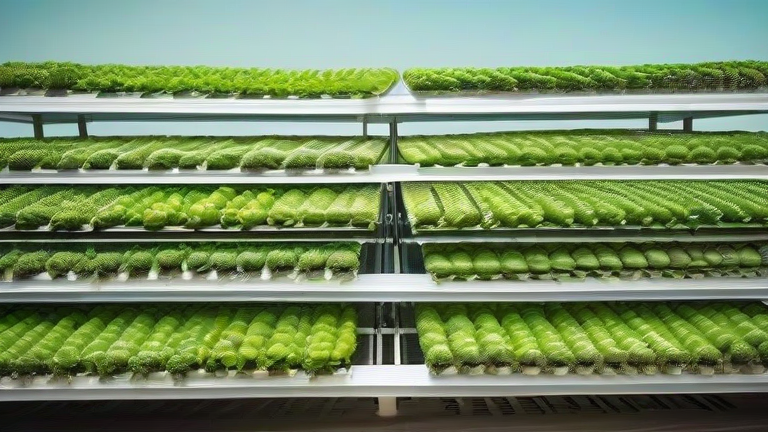
TL;DR: Vertical farming startups are rapidly adapting their indoor agriculture technologies for arid desert regions to enhance local food security and reduce water reliance. These pivots leverage advanced hydroponic systems and AI-driven climate control to thrive in extreme heat, offering scalable solutions for water-scarce nations.
The Strategic Shift to Arid Zones
Historically, vertical farming focused on dense urban centers in temperate climates. However, recent data indicates a significant pivot toward Middle Eastern and North African markets. Startups like AeroFarms and Plenty are now engineering specific modules designed to withstand external temperatures exceeding 45 degrees Celsius. This shift is driven by the urgent need for resilient food supply chains in regions where traditional agriculture is threatened by severe drought and limited arable land.
If you want to dig deeper, check out our guide on Home Appliance Microplastic Filtration Surges: Top Trends.
Technical Specifications and Innovations
The new generation of desert-ready vertical farms integrates high-efficiency heat rejection units and closed-loop water recycling systems. These facilities utilize up to 90 percent less water than conventional field farming by recirculating nutrient-rich solutions. LED lighting arrays are now calibrated with specific spectral wavelengths optimized for high-growth crops like leafy greens and herbs, which have short harvest cycles. Furthermore, machine learning algorithms monitor microclimates inside the farm, adjusting humidity and CO2 levels in real-time to prevent crop stress during peak heat hours. Energy consumption is mitigated by integrating rooftop solar panels, which are particularly efficient in high-sunlight desert environments.
Industry Impact and Future Outlook
This pivot is reshaping the agricultural technology landscape by proving that location independence is possible. Governments in Saudi Arabia and the UAE are investing heavily in these startups to meet national food security goals, reducing imports by up to 40 percent in pilot programs. The industry is moving away from a one-size-fits-all model toward modular, climate-specific solutions. As supply chains remain vulnerable to geopolitical and climate disruptions, vertical farming in deserts offers a stable, localized production method. Investors are increasingly favoring companies that demonstrate operational resilience in extreme environments, signaling a broader acceptance of indoor agriculture as critical infrastructure rather than a niche luxury market.
FAQ
Q: How do these farms manage extreme heat?
A: They use advanced HVAC systems and insulated structures to maintain optimal internal temperatures regardless of external conditions.
Q: Is desert vertical farming energy efficient?
A: Yes, when paired with abundant solar power, the energy costs are offset by the high efficiency of indoor growing conditions.
Q: What crops are best suited for this model?
A: Fast-growing leafy greens, herbs, and microgreens are ideal due to their short life cycles and high nutritional value.
Leave a Reply