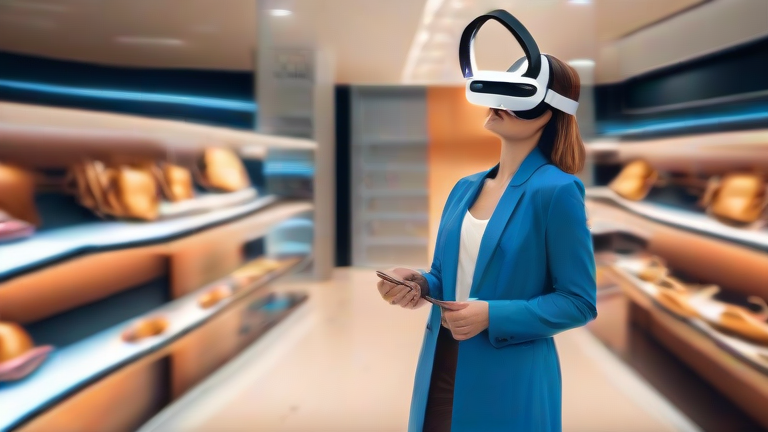
Virtual Reality Meets Physical Retail: Immersive Shopping

The retail landscape is undergoing a seismic shift as the boundaries between digital innovation and physical commerce blur. Virtual Reality (VR) is no longer just a gaming novelty; it has emerged as a powerful tool for enhancing the in-store experience. This convergence, often termed “phygital” retail, allows brands to offer immersive experiences that drive engagement, reduce returns, and foster deeper customer loyalty.
Market Analysis: The Rise of Immersive Commerce
Recent market data indicates a robust growth trajectory for VR in retail. According to industry reports, the global VR in retail market is projected to expand at a compound annual growth rate (CAGR) of over 25% through 2030. Consumers, particularly Gen Z and Millennials, are increasingly drawn to experiential shopping. They do not just want to buy products; they want to interact with them. The pandemic accelerated digital adoption, but physical stores are now leveraging technology to offer what e-commerce cannot: tangible, sensory immersion. Brands that fail to integrate these technologies risk losing relevance in an increasingly competitive market where attention is the scarcest resource.
Strategic Insights: Bridging the Gap
Successful integration of VR requires a strategic approach centered on value creation. Retailers must focus on utility rather than gimmicks. Key strategies include using VR for product visualization, such as allowing customers to “try on” cosmetics virtually or visualize how furniture fits in their homes before purchase. Furthermore, VR can be used for employee training, creating safe environments for complex product demonstrations. The goal is to reduce friction in the buying process while increasing emotional connection. Data analytics play a crucial role here; by tracking user interactions within the VR environment, retailers can gain insights into consumer preferences and optimize store layouts and inventory accordingly.
Case Studies: Leaders in Immersion
Several industry leaders have already pioneered this space. IKEA’s VR experience, “IKEA Place,” allows users to place true-to-scale 3D models of IKEA products in their own spaces using AR and VR technologies. This has significantly reduced return rates by ensuring customers make informed decisions. Similarly, Audi has utilized VR
Leave a Reply