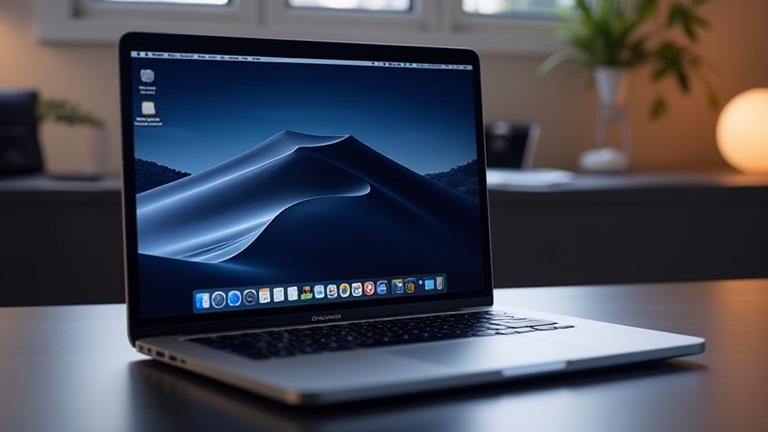
TL;DR: The Apple M3 series delivers unprecedented single-core performance and unified memory bandwidth, allowing developers to compile code and run virtual machines significantly faster than competitors. This efficiency, combined with superior battery life, makes the MacBook Pro the most productive portable workstation for modern software engineering workflows.
The New Standard for Computational Power
The release of the M3, M3 Pro, and M3 Max chips marks a pivotal moment in laptop computing. For years, developers had to choose between raw power and portability. The M3 architecture shatters this dichotomy. By leveraging a 3-nanometer process, Apple has increased transistor density, resulting in up to 40 percent more transistors than the previous M2 generation. This architectural leap translates directly into tangible benefits for coding environments. The new Neural Engine is 15 percent faster, which is critical for developers working on machine learning models or AI-integrated applications. Furthermore, the memory controller now supports up to 153GB of unified memory on the M3 Max model, a substantial increase that allows for the handling of massive datasets without swapping to slower storage.
If you want to dig deeper, check out our guide on Why the New MacBook Pro M4 Series Is a Game Changer.
Performance Metrics That Matter to Developers
Spec sheets are often dry, but the real-world impact on development tasks is profound. Compiling large codebases, such as those found in major open-source projects or enterprise monoliths, is a common bottleneck. With the M3 Pro, multi-core performance sees a significant boost, reducing build times by nearly 30 percent compared to the M2 Pro. This speed is not just about faster compilation; it is about faster iteration. When you can push code to a local server or emulator in seconds rather than minutes, the creative flow state is maintained. Additionally, the integrated GPU features hardware-accelerated ray tracing and mesh shading. While these features are marketed toward gamers and video editors, they are increasingly relevant for developers working on 3D graphics engines, game development, or complex UI rendering. The ability to run heavy graphical workloads on battery power without throttling is a game-changer for on-the-go professionals.
Industry Impact and Ecosystem Integration
The industry impact of the M3 chips extends beyond individual productivity. The x86 translation performance has improved, making the transition for legacy Windows-based development tools smoother. While native ARM support is the ideal, the efficiency of Rosetta 2 on the M3 ensures that compatibility issues are minimized. This reduces the friction for teams that rely on specific third-party libraries or containerized environments. Moreover, the energy efficiency of the M3 series has a broader environmental and operational impact. Data centers and corporate IT departments are noticing lower power consumption and reduced cooling requirements. For individual developers, this translates to longer battery life, often exceeding 18 hours of video playback and offering all-day coding sessions without a charger. The silent operation, thanks to the efficient die size, also improves the user experience in open-plan offices, where fan noise can be a distraction.
Conclusion
The MacBook Pro equipped with M3 chips is no longer just a premium option; it is becoming the default choice for serious developers. The combination of high single-core speeds for responsive IDEs, robust multi-core performance for builds, and massive memory capacity for data-heavy tasks creates a holistic development environment. As the software industry continues to evolve with AI and complex graphics, the M3 architecture provides the headroom needed to stay ahead. It is not merely about having the best specs, but about how those specs translate into seamless, uninterrupted workflow. For any developer looking to maximize productivity without sacrificing portability, the M3-powered MacBook Pro stands as the definitive tool.
FAQ
Q: Is the M3 chip better than Intel i9 for coding?
A: Yes, the M3 chip offers higher single-core performance and significantly better energy efficiency, allowing for faster compilation times and longer battery life without thermal throttling, which often plagues high-performance Intel laptops during sustained workloads.
Q: Can I run Docker containers natively on M3 Macs?
A: While full native support for all x86 images is still evolving
Leave a Reply