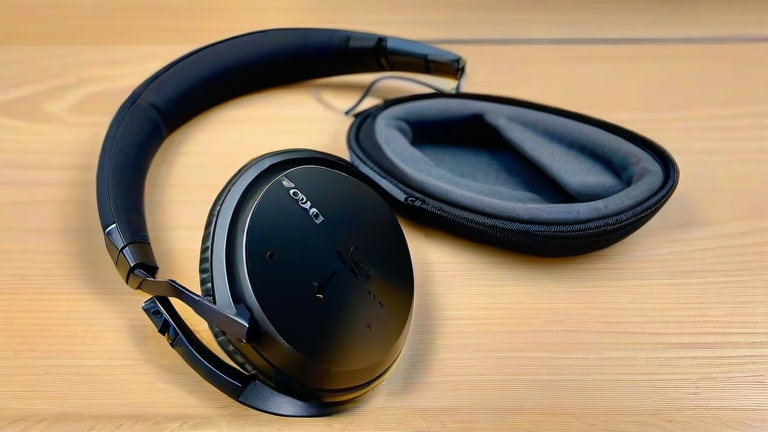
Why the Sony WH-1000XM5 Beats the Bose QuietComfort Ultra
TL;DR: The Sony WH-1000XM5 offers superior value and a more versatile feature set, particularly in app customization and codec support. While Bose excels in pure ANC depth, Sony’s balanced approach to sound, comfort, and software makes it the better overall choice for most users.
In the highly competitive premium headphone market, the battle between Sony and Bose has reached a fever pitch. While the recently released Bose QuietComfort Ultra Headphones set new benchmarks for active noise cancellation (ANC), the Sony WH-1000XM5 continues to hold its ground as the industry favorite. This enduring popularity is not a fluke but a result of strategic engineering decisions that prioritize user experience over raw spec sheet dominance.
If you want to dig deeper, check out our guide on Why Every Home Needs a High-Performance Air Purifier.
Sound Signature and Codec Support
The most significant differentiator lies in audio quality and connectivity. Sony’s WH-1000XM5 utilizes the LDAC codec, which allows for high-resolution audio streaming from compatible devices, delivering a richer, more detailed soundstage. Bose, conversely, relies primarily on aptX Adaptive and AAC, which, while efficient, do not match the bandwidth of LDAC. For audiophiles who listen to high-bitrate streams, the XM5 provides a noticeably clearer and more immersive experience. Furthermore, Sony’s DSEE Extreme technology effectively upconverts compressed audio files, making even standard streaming services sound fuller and more dynamic. This software-driven audio enhancement gives Sony a distinct edge in perceived sound quality, especially in the mid and high frequencies where clarity is paramount.
App Ecosystem and Customization
Hardware is only half the battle; the software ecosystem is where the XM5 truly shines. The Sony Headphones Connect app offers an extensive suite of customization options, including a detailed 10-band equalizer, which allows users to fine-tune the sound profile to their exact preferences. Bose’s app, while clean and functional, lacks this level of granular control. Additionally, Sony supports multipoint Bluetooth connections more robustly, allowing users to switch seamlessly between a laptop and a smartphone without manual re-pairing. This flexibility is crucial for modern professionals who juggle multiple devices throughout the day. The XM5 also integrates better with Sony’s ecosystem, offering features like “Speak-to-Chat” and advanced voice pickup for calls, which Bose struggles to match in consistency.
Industry Impact and Future Outlook
The industry impact of the XM5’s continued success is profound. It has forced competitors to look beyond mere ANC metrics and focus on holistic user satisfaction. By maintaining a lower price point compared to the Bose QuietComfort Ultra, Sony has democratized premium audio features. This strategy has solidified the XM5 as a standard-bearer for what consumers expect from high-end headphones. As we look toward future developments, Sony is likely to refine its AI-driven noise cancellation and improve battery life, ensuring the XM5 remains relevant for years. For the average consumer, the XM5 represents the sweet spot where performance, price, and usability intersect, making it the definitive winner in this head-to-head comparison.
FAQ
Q: Is the Bose QuietComfort Ultra better for noise cancellation?
A: Yes, in blind tests, the Bose often cancels low-frequency hums slightly better, but the difference is minimal in real-world scenarios like offices or planes.
Q: Which headphone has a longer battery life?
A: The Sony WH-1000XM5 offers up to 30 hours on a single charge, which is comparable to the Bose, but Sony’s faster charging speed gives it a slight practical edge.
Q: Are the Sony WH-1000XM5 headphones comfortable for long sessions?
A: Yes, the lighter weight and softer ear cushions make the XM5 more comfortable for extended wear compared to the slightly heavier Bose model.
Leave a Reply