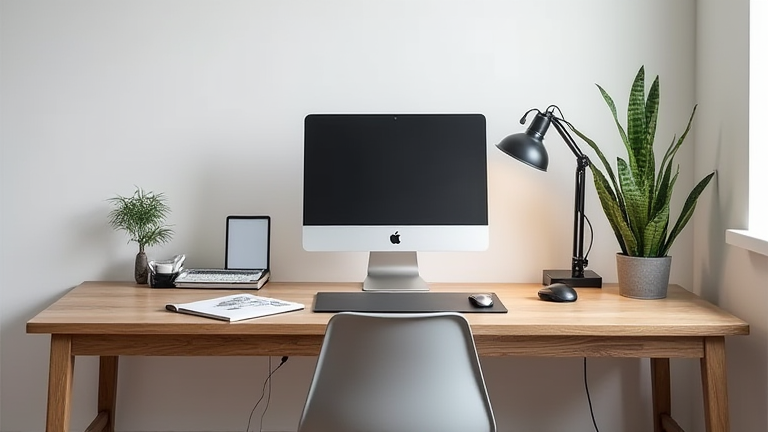
5 Minimalist Desk Setup Ideas to Boost Your Daily Focus
TL;DR: A minimalist desk reduces visual clutter, which directly lowers cognitive load and enhances concentration. By curating only essential tools and utilizing hidden storage, you create a serene workspace that supports deep work and personal clarity.
In our digital age, the workspace has become the modern altar of productivity. Yet, many of us find ourselves surrounded by a chaotic sea of sticky notes, tangled cables, and forgotten snacks. This visual noise is more than just an aesthetic issue; it is a psychological barrier. When your eyes are constantly scanning for distractions, your brain spends valuable energy filtering out irrelevant stimuli. To reclaim your mental bandwidth, consider adopting a minimalist approach to your desk setup. This is not about owning less, but about being intentional with what remains.
If you want to dig deeper, check out our guide on 7 Proven Daily Habits to Boost Your Energy and Immune System.
The first step is the “one in, one out” rule. Every new item added to your desk must displace an existing one. This forces you to evaluate the true utility of every object. Next, embrace verticality. Instead of spreading items across your desktop, utilize wall-mounted shelves or pegboards for frequently used tools like pens or notebooks. This keeps your primary workspace clear and open, allowing for a sense of freedom and possibility. When the surface is clean, your mind feels less constrained, fostering a state of flow that is essential for creative and analytical tasks.
Cable management is another critical, often overlooked element. Exposed wires create visual static that subconsciously signals disorder. Use cable clips, sleeves, or a simple wooden tray to tuck away charging cords and power strips. The goal is to create a smooth, uninterrupted plane. When you sit down to work, the absence of visual clutter allows you to enter a meditative state more quickly. This transition is vital for maintaining high levels of focus throughout the day. You are not just organizing a desk; you are designing an environment that supports your best thinking.
Lighting also plays a profound role in minimalist aesthetics and functionality. Choose a single, well-designed lamp with adjustable color temperature. Warm light for evening reflection and cool white light for morning focus. Avoid the harsh glare of multiple overhead fixtures. A single light source creates a focal point, guiding your attention inward rather than scattering it outward. This subtle shift in ambiance can significantly improve your mood and reduce eye strain, contributing to a more sustainable work rhythm.
Finally, incorporate a single natural element. A small succulent, a smooth stone, or a piece of wood can ground the space. Nature provides a restful break for the eyes and connects you to the organic world, even if you are working digitally. This touch of life softens the rigid lines of technology and furniture, making the space feel more inviting and less sterile. It serves as a gentle reminder to breathe and stay present.
Ultimately, a minimalist desk is a reflection of your internal state. By simplifying your external environment, you create room for clarity, creativity, and calm. It is an act of self-care that honors your time and attention. Start small, stay consistent, and watch how your productivity and peace of mind grow in tandem.
FAQ
Q: Is minimalism only for tech workers?
A: No, minimalism benefits anyone who spends focused time at a desk, including writers, artists, and students, as it reduces distractions for all types of work.
Q: How do I maintain a minimalist desk daily?
A: Spend five minutes at the end of each day resetting your space, putting items back in their designated places, and clearing away unnecessary papers or debris.
Q: Does a minimalist setup reduce creativity?
A: Contrary to popular belief, minimalism often enhances creativity by removing the mental friction of clutter, allowing the brain to focus on ideas rather than organization.
Leave a Reply