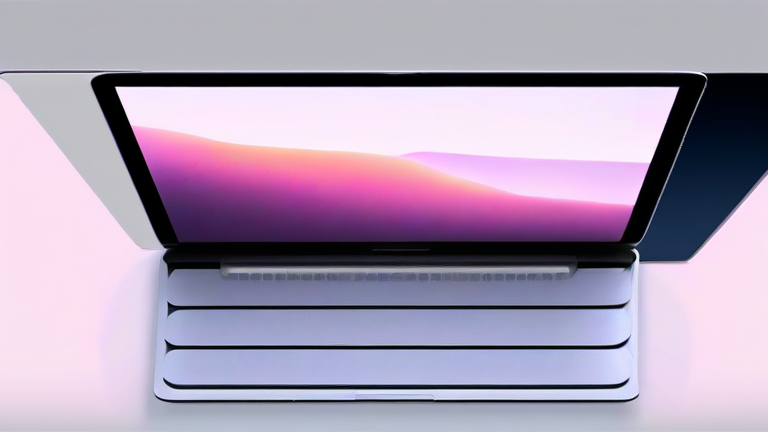
TL;DR: The MacBook Pro M3 Max redefines the creative workstation by delivering desktop-class GPU performance, unified memory bandwidth, and exceptional power efficiency in a portable chassis. Its combination of hardware-accelerated ray tracing, neural engines, and support for massive memory pools makes it the definitive tool for 8K video, 3D rendering, and AI-driven creative workflows.
A New Silicon Architecture for Demanding Creators
Apple’s M3 Max, built on a 3-nanometer process, marks a leap over its predecessors with a 16-core CPU and up to a 40-core GPU. For creative professionals, the headline feature is the unified memory architecture, offering up to 128GB of RAM with 400GB/s of memory bandwidth. This allows editors to load entire 8K timelines, complex 3D scenes, or massive machine-learning models without swapping to disk. Unlike traditional laptops that throttle under sustained load, the M3 Max’s dynamic caching and hardware-accelerated mesh shading ensure consistent performance during long render sessions.
If you want to dig deeper, check out our guide on Pampered Chef Smooth Edge Can Opener: Review & Tips.
Real-World Creative Workloads
In video editing, the M3 Max’s dedicated media engine supports ProRes and ProRes RAW decoding in hardware, enabling real-time playback of multiple 8K streams—a task that previously required a tower workstation. For 3D artists, the GPU’s ray tracing capabilities rival discrete laptop GPUs like the NVIDIA RTX 4080, but with a fraction of the power draw. Tools like Blender and Cinema 4D see 2-3x faster render times compared to the M1 Max, while DaVinci Resolve benefits from the Neural Engine’s 38 TOPS for AI-based noise reduction and upscaling. Audio engineers also gain from low-latency plugin processing, thanks to the CPU’s efficiency cores handling background tasks while performance cores handle real-time effects.
Industry Impact and Ecosystem Shifts
The M3 Max is already shifting industry benchmarks. Adobe has optimized After Effects and Premiere Pro for Apple silicon, and Unreal Engine 5.3 now supports Metal 3’s mesh shaders, making the MacBook Pro a viable platform for real-time virtual production. This has pressured PC OEMs to rethink their thermal designs—many high-end Windows laptops now sport vapor chambers and liquid metal to compete, yet still can’t match the M3 Max’s battery life (up to 22 hours of video playback). Moreover, the rise of on-device AI tools (e.g., Stable Diffusion, Topaz Video AI) leverages the M3 Max’s unified memory to run models that would otherwise need cloud servers, offering privacy and no latency.
Portability Without Compromise
The 16-inch model, despite its power, remains 0.66 inches thick and weighs 4.7 pounds. The Liquid Retina XDR display with 1,600 nits peak brightness and ProMotion 120Hz refresh is a color-accurate reference for HDR grading. Connectivity includes Thunderbolt 4, HDMI 2.1, and Wi-Fi 6E, ensuring compatibility with 8K monitors and external GPU docks—though the built-in GPU rarely needs help. For traveling filmmakers, the MagSafe charging and robust aluminum chassis withstand studio rigors. In short, the M3 Max doesn’t just keep up with creative workflows; it anticipates them.
FAQ
Q: Is the M3 Max worth upgrading from an M1 Max for video editors?
A: Yes, if you work with 8K or high-bitrate codecs—the M3 Max offers roughly 50% faster render times and adds hardware AV1 decode, which M1 Max lacks. For 4K-only workflows, the upgrade is less dramatic but still noticeable in AI effects.
Q: Can the M3 Max handle real-time ray tracing in 3D software?
A: Absolutely. It performs on par with an RTX 4080 laptop GPU in Blender’s benchmark scenes, with better power efficiency. For final-frame rendering, expect 2-3x speedups
Leave a Reply