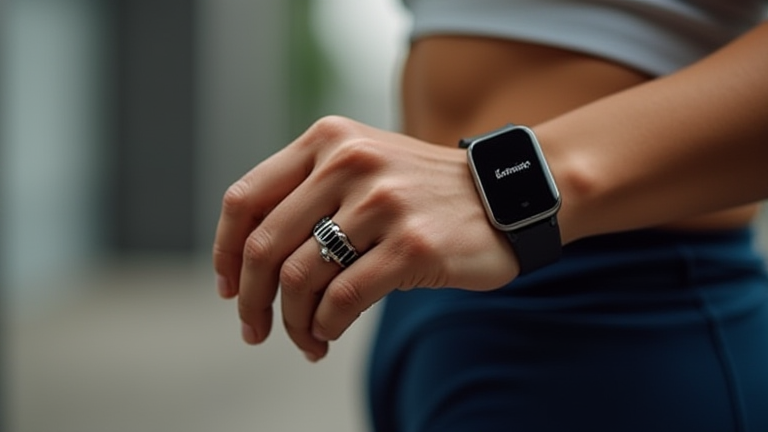
Why the Rise of Smart Rings Is Reshaping Wearable Fitness
TL;DR: Smart rings are reshaping wearable fitness by offering a discreet, all-day form factor that prioritizes long-term health metrics over active workout tracking. Their compact design allows for seamless integration into daily life, capturing continuous biometric data without the bulk or discomfort associated with traditional wrist-worn devices.
The wearable technology landscape is undergoing a significant shift, moving away from bulky smartwatches toward minimalist, unobtrusive alternatives. Smart rings, once a niche curiosity, are now emerging as a serious contender in the health and wellness market. This transition is driven by consumer fatigue with large, attention-demanding devices and a growing desire for subtle, continuous monitoring solutions that blend seamlessly into everyday attire. Market analysts predict that the global smart ring market will experience robust growth, with projections suggesting a compound annual growth rate exceeding 20% through 2030. This surge is fueled by increased investment from major tech firms and established health companies who recognize the potential of ring-based sensors for precise physiological monitoring.
One of the primary advantages of smart rings is their superior comfort and discretion. Unlike smartwatches, which can feel intrusive during sleep or high-intensity workouts, rings sit flush against the finger, allowing users to forget they are wearing them. This “invisible” technology encourages consistent wear, which is critical for accurate long-term health analysis. Expert insights from healthcare professionals highlight that continuous data streams from rings provide valuable insights into sleep quality, heart rate variability, and stress levels. These metrics are often more reliable when collected passively over extended periods, as opposed to the intermittent checks typical of wrist-worn devices. Furthermore, the smaller form factor allows for a different set of sensor configurations, potentially enabling more accurate blood oxygen and temperature readings due to closer proximity to major arteries in the hand.
However, the rise of smart rings also presents challenges. Battery life remains a significant hurdle, as the small physical space limits the size of the battery. Most current models require recharging every one to two days, which is less convenient than the multi-day battery life of many smartwatches. Additionally, sizing can be difficult for some users, leading to a higher return rate in e-commerce channels. Despite these hurdles, the future looks promising. Future predictions suggest that next-generation rings will incorporate artificial intelligence to provide personalized, actionable health advice directly on the ring or via companion apps. We may also see the integration of non-invasive glucose monitoring, a holy grail in diabetes management. As the technology matures, smart rings are likely to become a standard component of the modern health tech ecosystem, complementing rather than replacing smartwatches. They represent a paradigm shift toward wearable technology that serves the user silently, focusing on long-term well-being rather than momentary performance metrics. This quiet revolution is fundamentally changing how we approach personal health monitoring, making it more accessible, comfortable, and continuous.
FAQ
Q: Are smart rings better than smartwatches for tracking fitness?
A: Smart rings are better for passive, all-day health monitoring and sleep tracking due to their comfort and discretion, while smartwatches remain superior for real-time workout tracking and GPS navigation.
If you want to dig deeper, check out our guide on Mystery AI Model Wows Devs: Who Made It?.
Q: How accurate are the health metrics provided by smart rings?
A: While not medical-grade diagnostic tools, modern smart rings offer high accuracy for trends in heart rate, sleep stages, and temperature, making them reliable for monitoring general health patterns over time.
Q: What is the biggest limitation of current smart ring technology?
A: The primary limitation is battery life, as most models require frequent recharging, and the small form factor limits the amount of data processing power and sensor variety compared to larger wearables.
Leave a Reply